June 2026

Madhyamaheshwar: The Sacred Himalayan Shrine of Lord Shiva’s Nabhi – Second Among the Panch Kedars

Madhyamaheshwar: The Sacred Himalayan Shrine of Lord Shiva’s Nabhi – Second Among the Panch Kedars

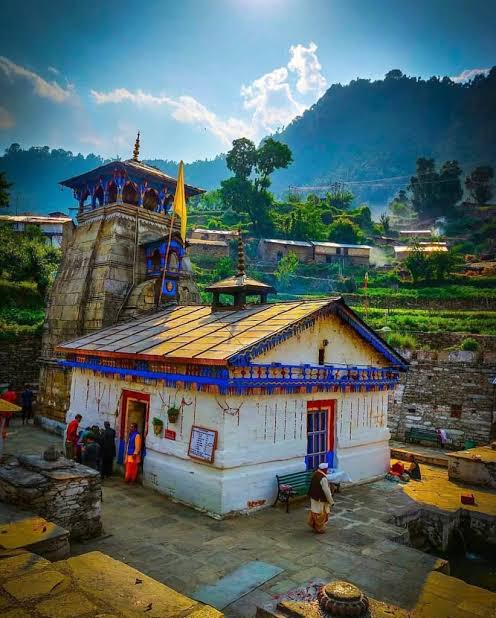
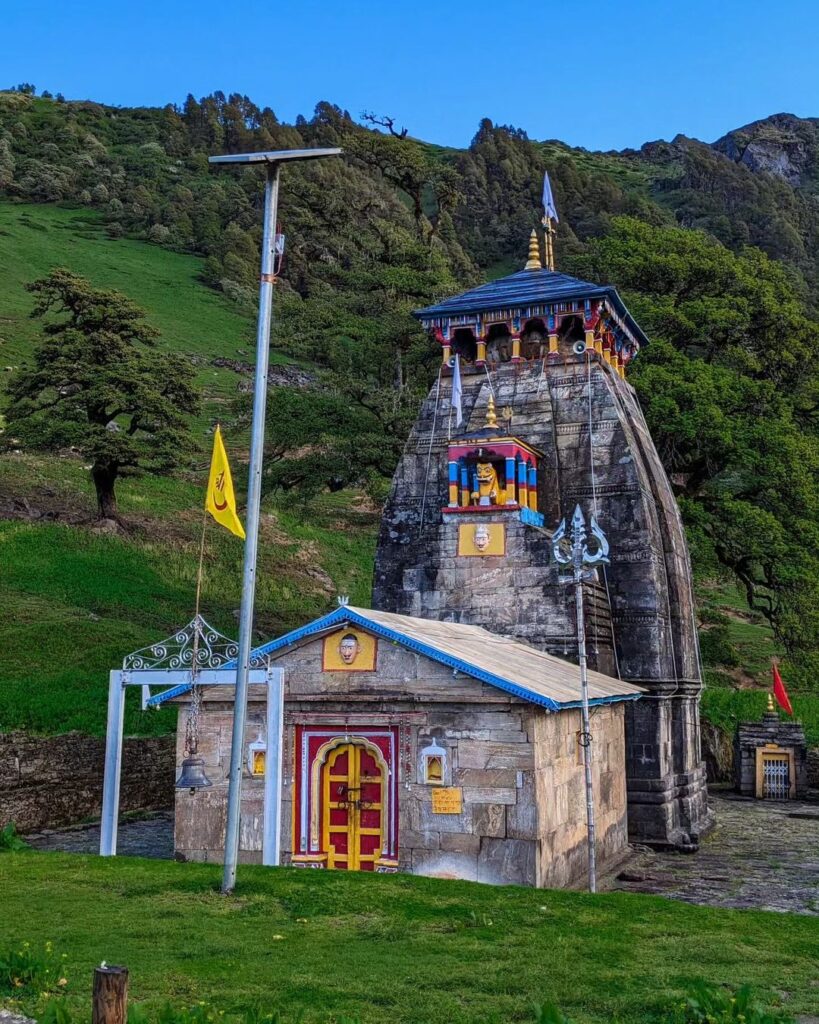
Madhyamaheshwar, dedicated to Lord Shiva and known as the second of the Panch Kedars, is a sacred shrine. Located in the lap of the Himalayas in the Rudraprayag district of Uttarakhand, the Madhyamaheshwar Temple is dedicated to the worship of Shiva’s “nabhi” (middle part), and its natural beauty and trekking routes attract numerous devotees and tourists. According to legend, after the Mahabharata war, the Pandavas came to the Himalayas to seek Lord Shiva’s blessings. When Shiva refused to grant them darshan, he disappeared in the form of a bull, and various parts of his body fell in different places; his middle part (nabhi) appeared at Madhyamaheshwar. At Madhyamaheshwar, Lord Shiva’s navel or middle part is worshipped, hence the name “Madhyam” + “Maheshwar.” It is believed that the Pandavas, the heroic figures of the Mahabharata, built this temple while searching for Shiva to atone for their actions. The temple is constructed in traditional and captivating Himalayan architecture, using stone. A self-manifested Shivalinga made of black stone is installed in its sanctum sanctorum

Madhyamaheshwar: The Sacred Himalayan Shrine of Lord Shiva’s Nabhi – Second Among the Panch Kedars Read More »

Jageshwar Dham: The Divine Abode of Lord Shiva Nestled Amidst Deodar Forests

Jageshwar Dham: The Divine Abode of Lord Shiva Nestled Amidst Deodar Forests

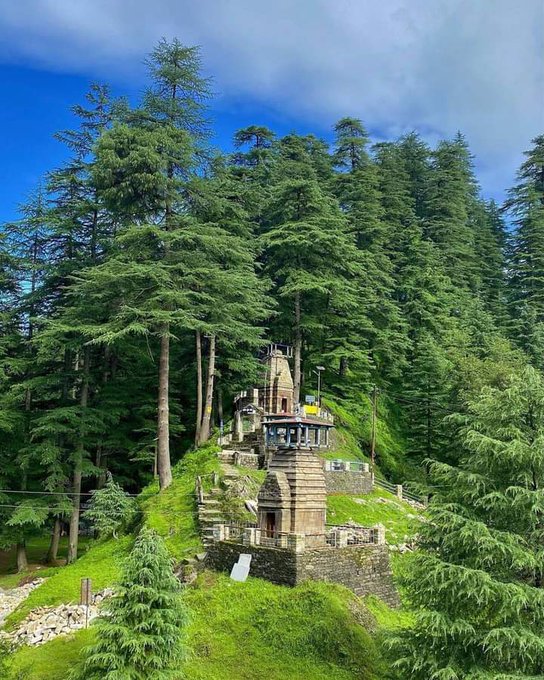
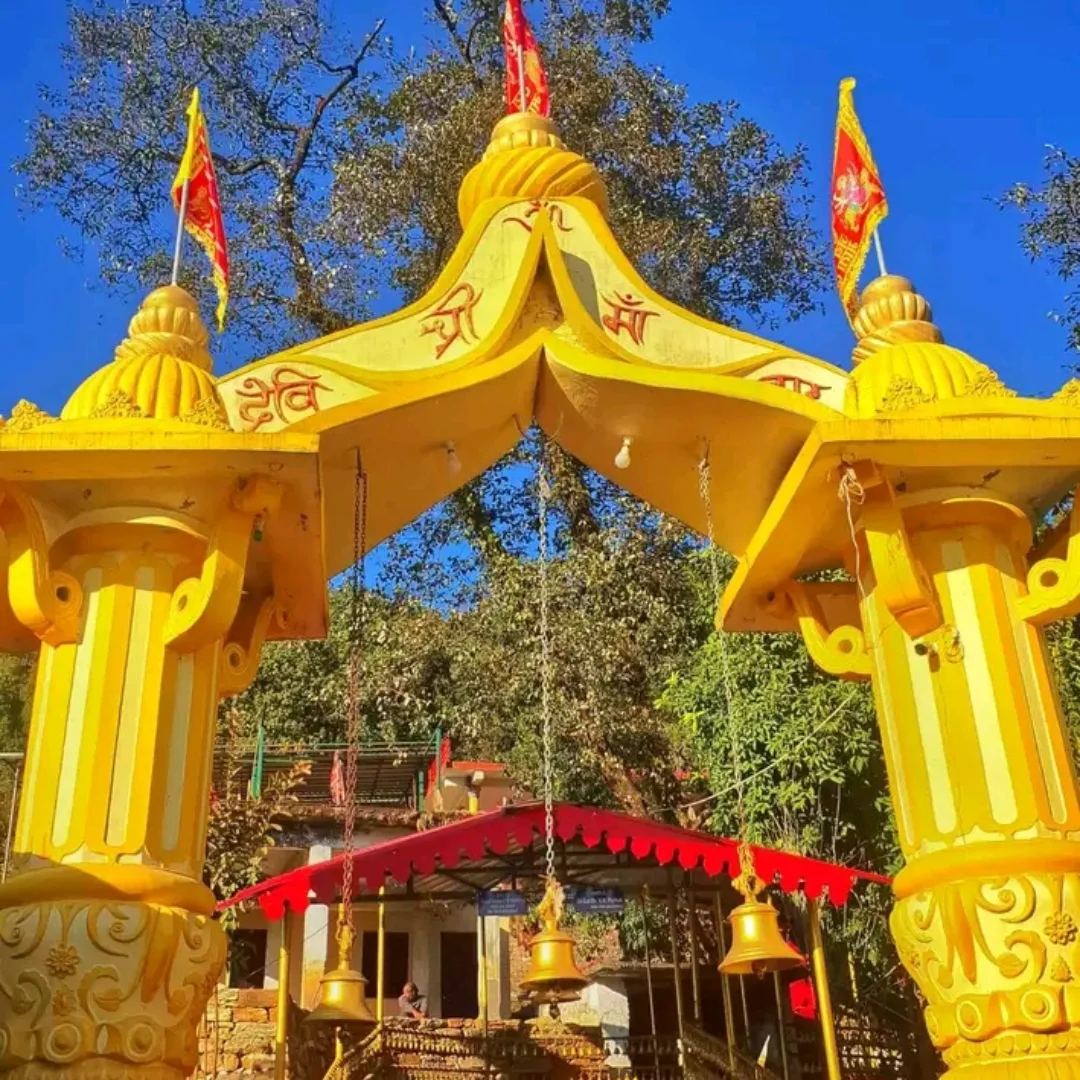
Situated at an altitude of approximately 1,870 meters above sea level in the Almora district of Uttarakhand, Jageshwar Dham is one of India’s most ancient and spiritual pilgrimage sites dedicated to Lord Shiva. Surrounded by towering Deodar trees, this sacred land lies on the tranquil banks of the Jata Ganga River; upon arrival, one immediately experiences a magnificent confluence of nature, history, and spirituality. Jageshwar Dham is not merely a single temple but a vast complex comprising over 125 ancient temples. Constructed primarily of stone, these temples feature the Nagara style of architecture, which remains an exquisite example of medieval Indian craftsmanship. The sound of temple bells ringing from all directions and the cool breeze blowing through the Deodar trees create an atmosphere of profound peace and divinity. Mythological Significance Jageshwar Dham holds a special place in Hindu scriptures. It is mentioned in the Shiva Purana as “Nagesham Darukavane,” a reference that many devotees associate with the eighth Jyotirlinga of Lord Shiva. Religious belief holds that this is the very place where Lord Shiva first accepted worship in the form of a Shivling. Consequently, this shrine has remained a center of unwavering faith for Shiva devotees for centuries. An Invaluable Historical Heritage Most of the temples at Jageshwar were constructed between the 7th and 18th centuries during the reigns of the Katyuri and Chand dynasties. Notable among them are the Shri Jageshwar Mahadev Temple, Mahamrityunjaya Temple, Kuber Temple, Dandeshwar Temple, and Pushti Devi Temple. The Mahamrityunjaya Temple is renowned for its unique architectural style and its massive Shivling. It is believed that worshipping Lord Shiva here grants protection against disease, fear, and untimely death. The Visit of Adi Shankaracharya It is believed that the great philosopher and saint Adi Shankaracharya visited Jageshwar Dham during his pilgrimage to Kedarnath. He oversaw the renovation of several ancient temples here and played a pivotal role in reviving the pilgrimage site’s religious traditions. Thanks to his efforts, Jageshwar Dham regained its status as a prominent pilgrimage site dedicated to Lord Shiva. Natural Beauty and Spiritual Serenity The defining feature of Jageshwar Dham is its natural setting. The surrounding dense deodar forests, the cool mountain breeze, and the soothing murmur of the Jata Ganga River instill a deep sense of peace. This is why pilgrims visit not only for worship but also to find mental tranquility and a profound spiritual experience. Travel Information Jageshwar Dham is located approximately 35 kilometers northeast of Almora town. It is easily accessible by road; the nearest major railway station is Kathgodam, and the nearest airport is Pantnagar. The best time to visit is between April and June and from September to November, when the weather is pleasant and favorable for travel. However, the religious atmosphere is at its most vibrant during the month of Shravan. Major Festivals Jageshwar Dham draws thousands of devotees during the Shravani Mela (monsoon festival) in the month of Shravan (July–August) and on the occasion of Mahashivratri. Special prayers, Rudrabhishek rituals, devotional singing (bhajan-kirtan), and other religious ceremonies are organized during these times, immersing the entire temple complex in an atmosphere of deep devotion to Lord Shiva. Why Visit Jageshwar Dham? If you wish to experience ancient history, magnificent temple architecture, natural beauty, and spiritual peace all in one place, Jageshwar Dham is an ideal pilgrimage destination. Its divine aura, serene environment, and centuries-old religious heritage leave an indelible impression on every traveler’s mind.

Jageshwar Dham: The Divine Abode of Lord Shiva Nestled Amidst Deodar Forests Read More »

Veteran Star R. Madhavan Receives Padma Shri for Outstanding Contribution to Cinema

Veteran Star R. Madhavan Receives Padma Shri for Outstanding Contribution to Cinema

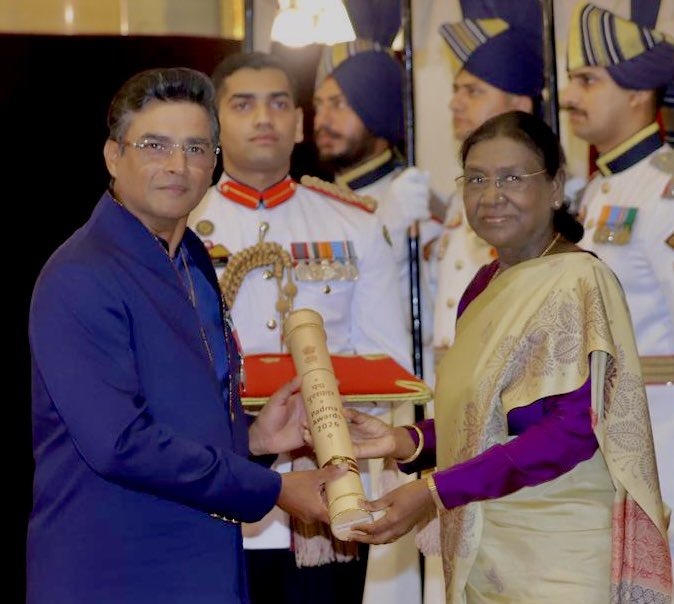
Veteran Indian cinema leader, writer, and director R. Madhavan was awarded India’s highest civilian honor, the Padma Shri, by President Draupadi Murmu at a special ceremony held at Rashtrapati Bhavan on June 23rd. R. Madhavan has worked in Tamil and Hindi films, as well as several successful web series and pan-India projects. He was awarded the prestigious Padma Shri by the Indian government for his versatile acting skills. R. Madhavan was born on June 1st, 1970, in Jamshedpur, Jharkhand. He began his career in 1993 with the TV show “Banegi Apni Baat.” R. Madhavan gained immense popularity with Mani Ratnam’s film Alaipayuthey (Tamil). Its Hindi remake, “Raha Hai Tere Dil Mein,” established him as a “lover boy” across the country. His major achievements include winning four Filmfare Awards (Tamil and Hindi) for acting. He was awarded the Padma Shri by President Draupadi Murmu for his outstanding contributions to art and cinema. He recently made his directorial debut with Rocketry – The Nambi Effect, which received widespread acclaim. List of R. Madhavan’s best-known Hindi and pan-India films

Veteran Star R. Madhavan Receives Padma Shri for Outstanding Contribution to Cinema Read More »

Harela : An ancient mountain tradition of nature conservation

Harela : An ancient mountain tradition of nature conservation

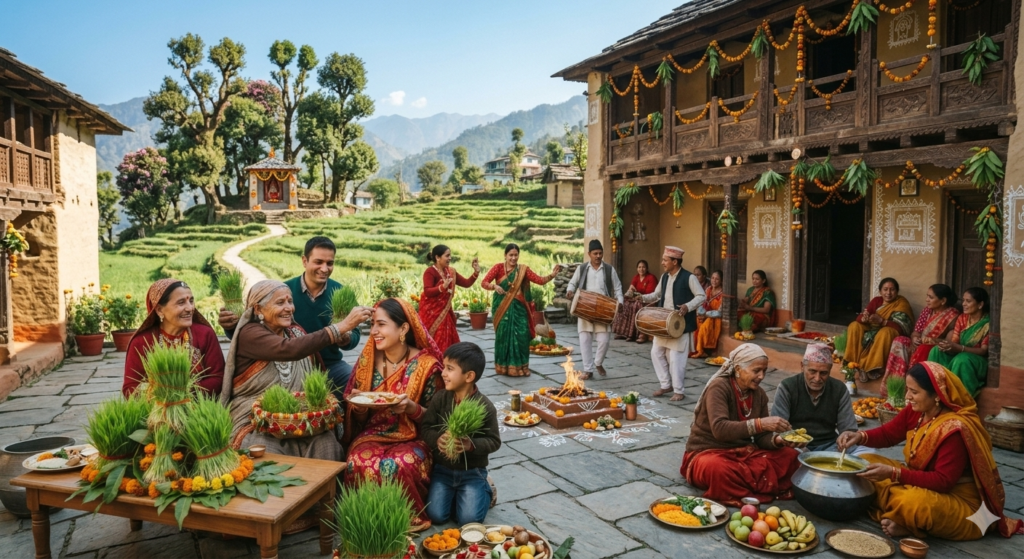
Harela is a major cultural and agricultural festival in Uttarakhand, considered a symbol of the arrival of monsoon and greenery. This festival is primarily celebrated on Karka Sankranti, the beginning of the Shravan month (Sawan) in July. People plant trees to protect the environment. The word Harela means “arrival of greenery,” which symbolizes the beginning of the sowing cycle and prosperity in agricultural regions. Nine days before this festival, five to seven types of grains, including barley, wheat, and maize, are sown in bowls or other utensils in homes. On the tenth day, the greenery is harvested and offered to the gods and goddesses. Elders place the greenery on the heads or ears of family members, blessing them with happiness, good health, and long life. According to traditional beliefs, this festival began with the marriage of Lord Shiva and Goddess Parvati. While Harela, celebrated in the month of Sawan, is also considered a symbol of the marriage of Shiva and Parvati, in many places, idols of Shiva, Parvati, and Kartikeya are made from clay and worshipped. In 2016, the Uttarakhand government and the Forest Department began celebrating this festival as Tree Planting Day across the state with public participation. On this day, shade-bearing and fruit-bearing trees are planted extensively in every school, college, government office, and village across the state. The Uttarakhand government has also declared this day a public holiday, and a message of environmental protection is also spread through large-scale tree planting throughout the state. Recently, a record was set for the festival, with over 800,000 trees planted in a single day. Additionally, the 2026 environmental campaign will be based on two main central and state-level concepts. The celebrations are being combined with major environmental conservation campaigns, such as the Prime Minister’s nationwide campaign “Ek Ped Maa Naam” and the Chief Minister’s “Celebrate Harela Festival, Repay the Debt to Mother Earth.” On July 16th, the Uttarakhand government is preparing to set a new record by planting over 500,000 trees in a single day across the state, announcing the planting of approximately 300,000 trees in the Garhwal region and 200,000 trees in the Kumaon region. Reports are also emerging that Uttarakhand communities living abroad will also celebrate this festival on a large scale in 2026. For example, the “Uttarakhand Organisation of New Zealand” is organizing a grand Harela Utsav 2026 in Auckland on July 18th, 2026, featuring performances of traditional Jhora and Chhapeli folk dances.

Harela : An ancient mountain tradition of nature conservation Read More »

Uttarakhand’s Pahari Cuisine: Nutritious Hill Delights from Kafuli to Mandua Roti

Uttarakhand’s Pahari Cuisine: Nutritious Hill Delights from Kafuli to Mandua Roti

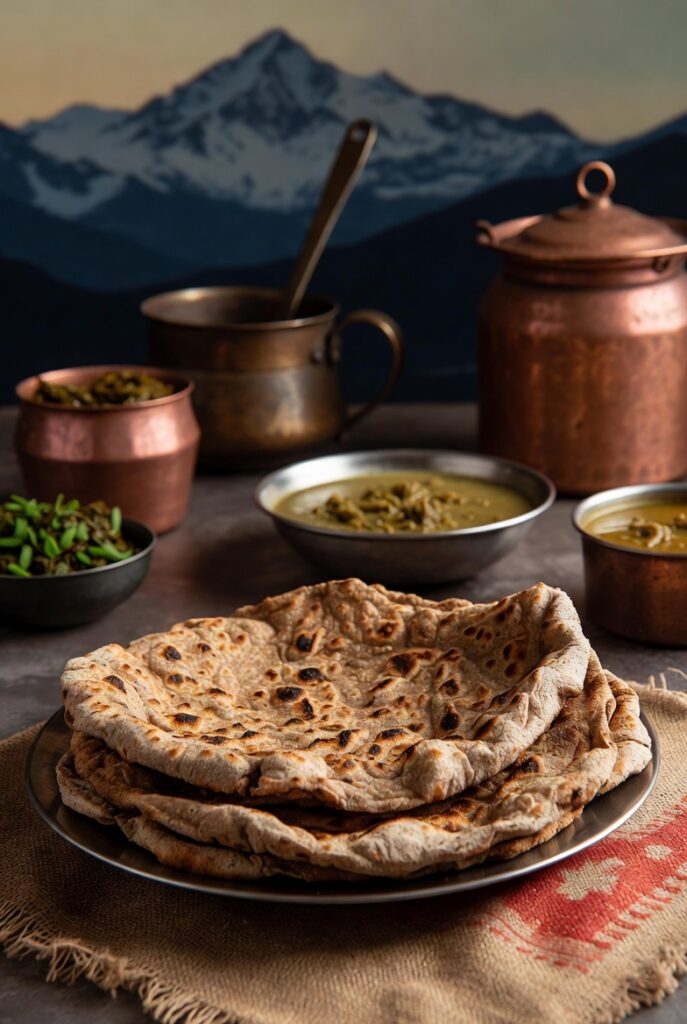
Uttarakhand is not only known for its beauty, but also for its traditional cuisine, known throughout the country as Pahadi food. It is not only delicious but also nutritious. Pahadi cuisine is made from locally grown ingredients like millets (mandwa, jhangora) and seasonal vegetables. Today, we’ll discuss some of these traditional dishes, including kafuli, phaanu, and chainsu, bhatt ki churukani, mandwa roti, bhang chutney, aalu k gutke, and jhangora kheer. Kafuli is made from pahadi spinach and fenugreek leaves. It is a slow-simmered green curry. The spinach and fenugreek leaves are ground into a paste, then cooked over low heat. Very little oil is used, and the flavor is mild. People here eat it with plain rice. Kafuli contains iron, fiber, and vitamins A and C, which contribute to blood health and immunity. Mandua roti is a traditional dish of Uttarakhand, made from ragi flour. The roti is dark in color. Locals enjoy it during the winter season with simple dal or saag. Mandua is rich in fiber and calcium. It also provides iron and slow-release carbohydrates, which support bone health.

Uttarakhand’s Pahari Cuisine: Nutritious Hill Delights from Kafuli to Mandua Roti Read More »

Emotional Moment: Alka Yagnik Awarded Padma Bhushan, Dedicates Honour to Fans and Well-Wishers

Emotional Moment: Alka Yagnik Awarded Padma Bhushan, Dedicates Honour to Fans and Well-Wishers

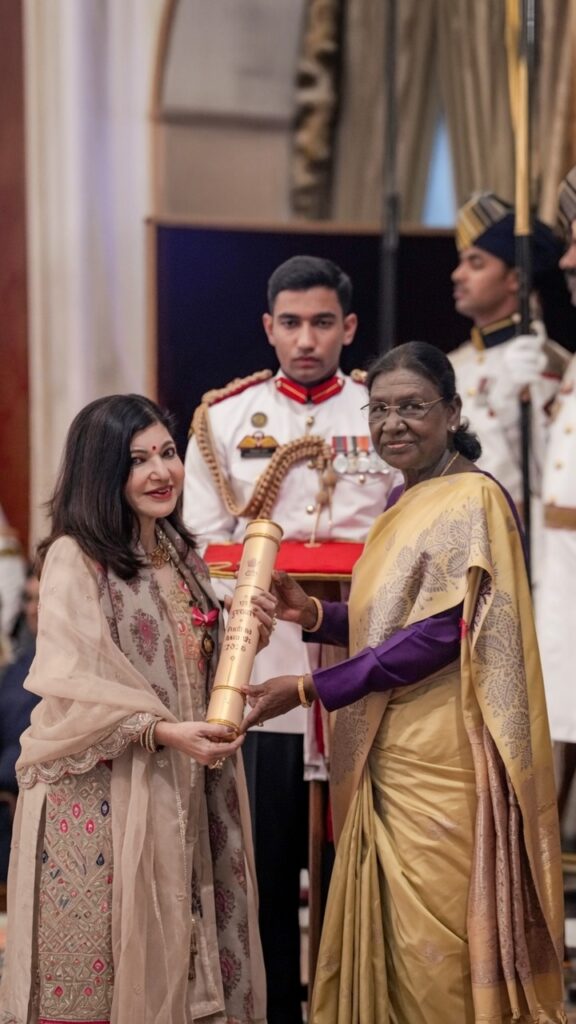
Renowned Bollywood singer Alka Yagnik was awarded the Padma Bhushan, India’s third highest civilian honour, by President Draupadi Murmu at a special ceremony held at Rashtrapati Bhavan on June 23, 2026. She was presented with the prestigious award for her four decades of outstanding contribution to Indian music and for recording over 22,000 songs. Meanwhile, Alka Yagnik expressed her feelings upon receiving the Padma Bhushan. She shared a post on social media expressing her gratitude for the honor. She also spoke about her health challenges. Alka Yagnik wrote, “For the past two years, I have been afraid to appear in public and share most of my journey. Many of you knew that I was not well. Throughout this time, your love, prayers, messages, and support have been with me every step of the way.” Singer Alka Yagnik wrote about the Padma Award: “Today, as I walked out to receive the Padma Bhushan, one of the country’s highest civilian honors, I was thankful with all my heart. This honor is very important. While it belongs to me, it belongs equally to every listener who embraced my voice in their lives and supported me through difficult times. I am slowly finding my way. I wanted to be here today not just for myself, but for each one of you.” Alka Yagnik is known for her melodious voice and has sung in many Indian languages. Over the years, Alka Yagnik has sung many famous songs across genres. Her songs include memorable songs like “Choli Ke Peeche” from “Khalnayak,” “Dil Ne Yeh Kaha Hai Dil Se” from “Dhadkan,” “Hum Tum” from “Hum Tum,” “Ghunghat Ki Aad Se” from “Hum Hain Rahi Pyar Ke,” and “Kuch Kuch Hota Hai” from “Kuch Kuch Hota Hai.”

Emotional Moment: Alka Yagnik Awarded Padma Bhushan, Dedicates Honour to Fans and Well-Wishers Read More »

The place where divine wedding took place : Triyuginarayan

The place where divine wedding took place : Triyuginarayan

Triyuginarayan, located in the Rudraprayag district of Uttarakhand, is a renowned and historic Hindu temple. It is celebrated as the site where the marriage of Lord Shiva and Goddess Parvati took place. Although primarily dedicated to Lord Vishnu—who presides here alongside Goddess Lakshmi—the temple holds immense significance due to the divine union of Shiva and Parvati. It is situated approximately 12 kilometers from Sonprayag and 25 kilometers from Guptkashi. Legend has it that Lord Vishnu performed the duties of Parvati’s brother during this divine wedding, while Lord Brahma officiated as the priest for the sacred rituals. A distinctive feature of the temple is the Akhand Jyoti (eternal flame) that burns continuously in front of the shrine; it is believed that this fire has been alight since the time of Shiva and Parvati’s wedding. The temple courtyard houses a sacred fire pit known as the “Akhand Havan Kund or Akhand Dhuni“. Devotees often take home the sacred ash from this pit, as it is considered a symbol of happiness and good fortune in married life. In front of the temple lies a sacred stone platform called “Brahma Shila,” which is believed to be the exact spot where the wedding ceremony occurred. The temple complex also features four sacred water pools—Rudra Kund, Vishnu Kund, Brahma Kund, and Saraswati Kund—where the gods are said to have bathed during the wedding procession of Lord Shiva. Due to its mythological significance, Triyuginarayan is gradually emerging as a popular and sacred wedding destination. In recent times, several prominent celebrities, television stars, and major industrialists have chosen this venue for their weddings. Triyuginarayan, located in the Rudraprayag district of Uttarakhand, is a renowned and historic Hindu temple. It is celebrated as the site where the marriage of Lord Shiva and Goddess Parvati took place. Although primarily dedicated to Lord Vishnu—who presides here alongside Goddess Lakshmi—the temple holds immense significance due to the divine union of Shiva and Parvati. It is situated approximately 12 kilometers from Sonprayag and 25 kilometers from Guptkashi. Legend has it that Lord Vishnu performed the duties of Parvati’s brother during this divine wedding, while Lord Brahma officiated as the priest for the sacred rituals. A distinctive feature of the temple is the Akhand Jyoti (eternal flame) that burns continuously in front of the shrine; it is believed that this fire has been alight since the time of Shiva and Parvati’s wedding.

The place where divine wedding took place : Triyuginarayan Read More »

The Chopta Valley -Mini Switzerland Of India

The Chopta Valley -Mini Switzerland Of India

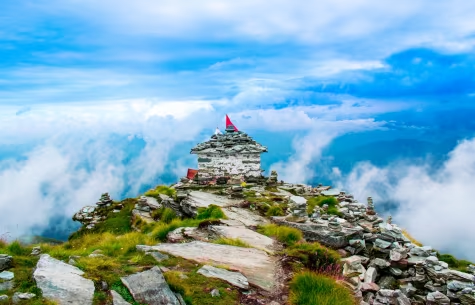
Chopta, a beautiful valley and hill station located at an altitude of 8,888 feet in the Rudraprayag district of Uttarakhand, is also known as Mini Switzerland. Nestled in the lap of the Garhwal Himalayas, it is a beautiful, serene, and pristine hill station. Known for its vast, lush green meadows, the meadows are completely covered in a blanket of snow during winter. This area is part of the Kedarnath Wildlife Sanctuary (bird watching), home to the colorful Monal and many rare bird. Lush green meadows and pleasant weather prevail between April and June, and snow-capped peaks are visible from October to January. Accommodation options include a radiation camp, Swiss tents, homestays, and small local guest houses, offering a feeling of being in the midst of nature. It is also a popular destination for tractors, with multiple trekking routes traversing through forests and meadows. A variety of different birds are also found here, making it popular for bird watching. Activities in Chopta Valley Main Attractions in Chopta Valley

The Chopta Valley -Mini Switzerland Of India Read More »

From Kumaon to Pauri: How Kandoliya Devta Became the Guardian of Justice

From Kumaon to Pauri: How Kandoliya Devta Became the Guardian of Justice

Uttarakhand isn’t known as the Land of the Gods for nothing. Every few miles, you’ll find temples dedicated to deities, each with its own unique beliefs. Today, we’re going to discuss one such temple: the Kandoliya Devta, worshipped as the god of justice. The Kandoliya Devta Temple is located in the Pauri district of Uttarakhand, at the top of the city of Pauri. Every year, in June, a three-day Kandoliya Fair and a grand feast are held at this temple. Thousands of devotees, not only from local areas but also from other regions, come to worship and participate in the grand feast. Each year, this temple hosts a major religious event, with many renowned folk artists invited to perform. It is believed that many years ago, a girl from Kumaon was married to a man from the Dungaria Negi caste in Pauri village. After the marriage, she brought her deity in a sacred pot (Kandi). After this, the deity came to be known as the Kandoliya deity, and its worship began in Pauri village as well. It is believed that the deity later appeared in the dream of a villager and ordered that his place be built at a higher place. After this, the Kandoliya deity was installed on a hill overlooking the entire city. Since its establishment, the Kandoliya deity temple has become famous as the deity of justice. It is worth noting that the Kandoliya deity is essentially a form of Lord Shiva. Local people visit the temple periodically throughout the year to worship. It is also believed that the Kandoliya deity gives information or warning of any future harm or danger.

From Kumaon to Pauri: How Kandoliya Devta Became the Guardian of Justice Read More »

Kotgadi Devi Temple: Where Goddess Bhagwati Delivers Justice for Five Generations

Kotgadi Devi Temple: Where Goddess Bhagwati Delivers Justice for Five Generations

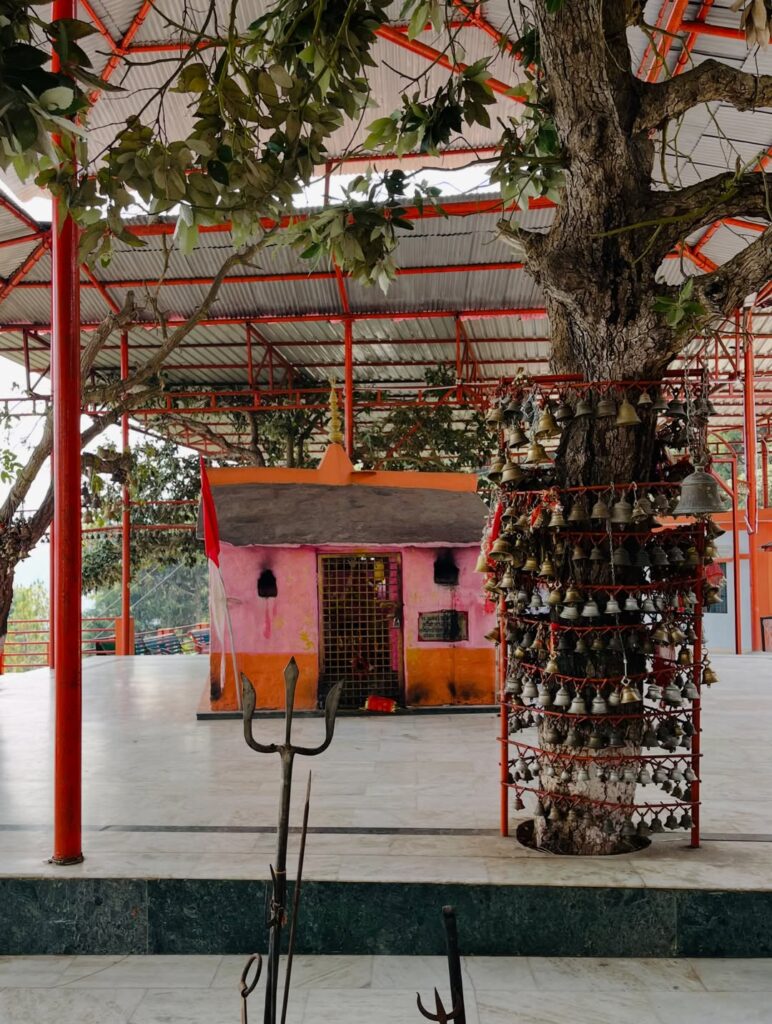
In Uttarakhand, known for its beautiful valleys, lies a temple known as the Supreme Court of the Mountains. Located in Pankhu village in the Pithoragarh district of Uttarakhand, the Kotgadi Temple is believed to be a manifestation of Goddess Mata Bhagwati. Goddess Bhagwati resides here in the form of Vaishnavi. It is believed that just as Golu Dev of Chitai provides justice to those oppressed by evil, the Kotgadi Devi of Pankhu also provides justice to those suffering from evil. Bhandari Gwal is considered the chief servant of Goddess Kotgadi Devi. Only pure offerings are offered to Mata Kotgadi here, and whenever a wish is fulfilled, a sacrifice is offered in her court. However, this offering is not made to Mata Kotgadi but to the shrines of her servants, Gwal and Bhairava. However, the practice of sacrifice has now been abolished. Even today, people here trust the justice of Kotgadi Devi more than the courts. For justice, people here write the court’s decision on stamp paper and submit it to the Mata’s court, which is why it is called the Supreme Court of the Mountains. It is believed that Mata Kotgadi is the living goddess of justice. Locals say that in ancient times, decisions for the entire region were made in the Mata’s court. Justice for not just crimes, but also for five generations is also dealt with in the Mata’s court. Unjust crops given five generations ago are also heard here. People believe that whether they get justice elsewhere or not, they will definitely get it in the court of Kotgadi Mata. The image of the Goddess Kotgadi is clearly embossed in the statue, which is why the statue is kept covered. Apart from Mata, Surajmal and Churmal deities are also worshipped in the Kotgadi Mata Dham. Every year, a fair is organised in the Mata Kotgadi Dham on the Ashtami of Chaitra and Ashwin months and Rishi Panchami in Bhado.

Kotgadi Devi Temple: Where Goddess Bhagwati Delivers Justice for Five Generations Read More »