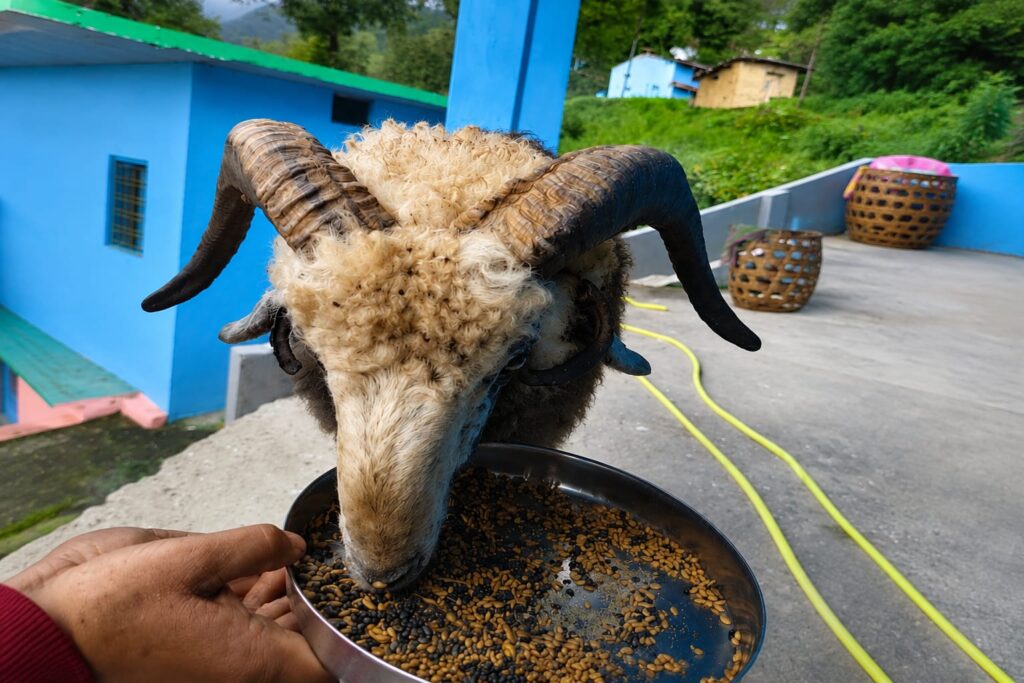
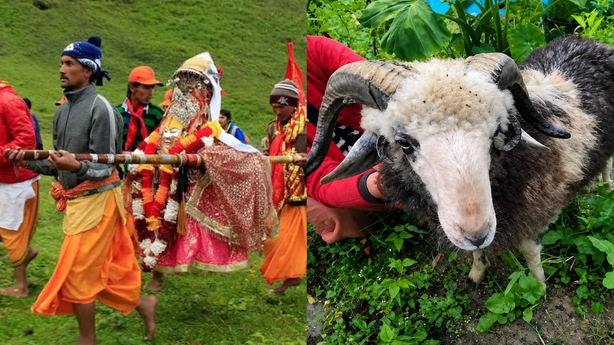
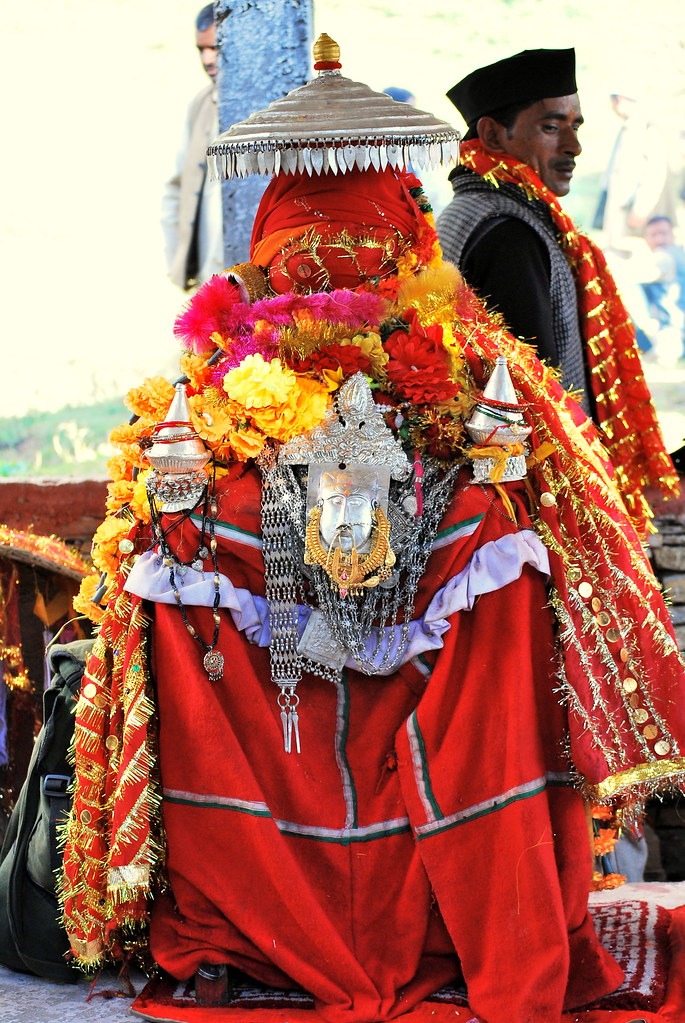
The Nanda Devi Raj Jat Yatra is a sacred pilgrimage held every 12 years in Chamoli district of Uttarakhand. Regarded as one of the most arduous pilgrimages in Asia, it is often called the ‘Kumbh of the Himalayas’. Devotees cover nearly 260 km on foot over 19 days, crossing high-altitude bugyals and rugged terrain. According to mythological and local beliefs, the tradition dates back several centuries, with some historians linking its formal organization to the Garhwal and Kumaon kingdoms around the 7th–8th centuries. Maa Nanda is regarded as a form of Goddess Parvati, the daughter of the Himalayas and consort of Lord Shiva. The yatra symbolizes her journey to her in-laws’ home in the Himalayas, with devotees accompanying her in a grand farewell procession. A unique feature of the pilgrimage is the Chausingya Khadu (four-horned sheep), which is born only once every 12 years and traditionally leads the procession of Goddess Nanda.
This year, the Chausingya Khadu (four horned sheep), which will lead Mother Nanda to Kailash during this major pilgrimage, scheduled for September 5, 2026, was born eight months ago in Sung village of Nandanagar. The lamb was born in the cowshed of Ramesh Singh Bisht, the current deputy head of the village, and will be formally dedicated to the goddess Nanda. Remarkably, this is the third time a Chausingya Khadu has been born in Sung village.
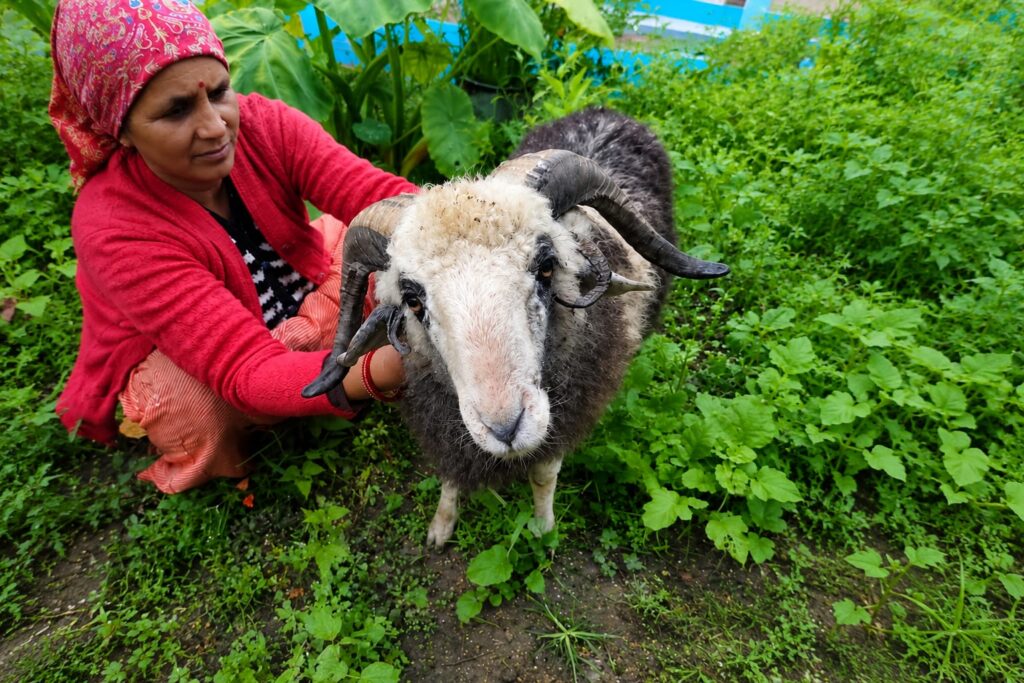
Previous ones were born to Bilokh Singh in 2000 and Kedar Singh Bisht in 2014 both of which participated in the Raj Jat Yatra. Villagers consider the repeated births a special blessing from Goddess Nanda and are filled with excitement. On 3 September 2026, the residents of Sung will take the sacred Khadu to Siddhapeeth Kurud Temple in a traditional procession accompanied by drums and folk instruments. After ritual worship, the Chausingya Khadu will join the main Badi Jat Yatra, where it will lead the festive palanquin of Goddess Nanda as the symbolic guide of the pilgrimage.