Hillywood

''A unique initiative by Dindyali Café & Homestay to preserve and promote Pahadi food and cultural traditions”

”A unique initiative by Dindyali Café & Homestay to preserve and promote Pahadi food and cultural traditions”

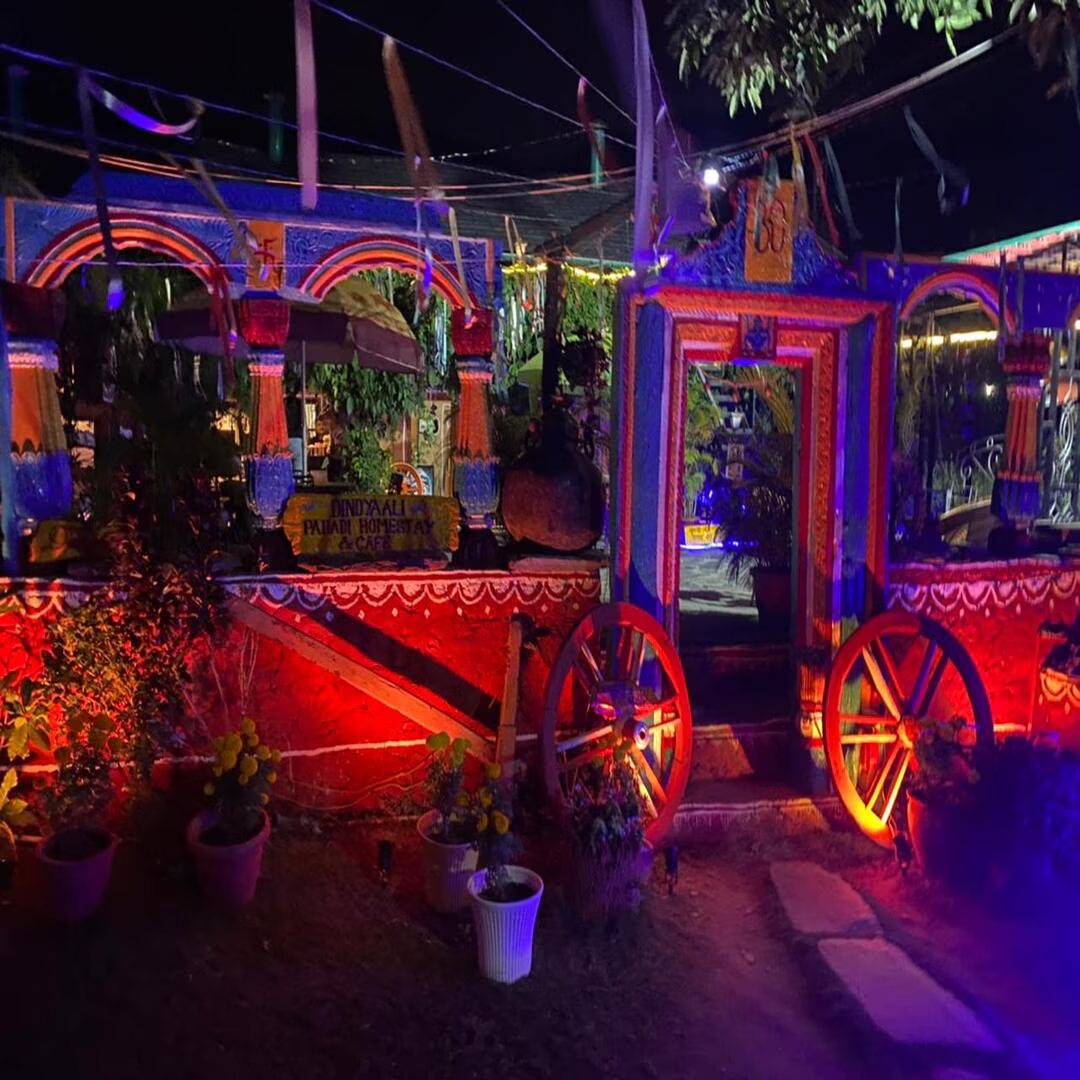
In Dehradun, the capital of Uttarakhand, lies a café called Dindyali Cafe & Homestay, offering a sense of rural peace and tranquility even amidst the hustle and bustle of the city. Despite living in the city, people often miss their ancestral villages. Keeping this in mind, Arvind Naithani opened the Pahari Cafe near Thano Road, a natural setting in Dehradun. The café introduces visitors to the cuisine, home architecture, and culture of the mountains, perfectly reflecting the traditional Pahari style. Owner Arvind Naithani says that he didn’t enjoy the hustle and bustle of the city and deeply missed his village and culture, which is why he decided to open this café. The menu features a variety of delicious Pahari dishes, including Pahari Kadhi, Aloo Gutka, Chausa, Jhagore Kheer, Madwa Roti, Bhang Chutney, Ghati Dal, and more. The cafe is designed with mud floors and wood carvings. The decorations include brass and copper pitchers, copper plates, bowls, appliqué art on the walls, bamboo baskets, handwoven carpets, and yellow earthen lamps and old lanterns. Natural colors like white, ivory, wheatish color, and natural wood color have been chosen for decorating the cafe. Dindyali is famous for its authentic Garhwali Pahadi Thali, which people come from far and wide to taste.

”A unique initiative by Dindyali Café & Homestay to preserve and promote Pahadi food and cultural traditions” Read More »

Uttarakhand's People's Poet Girish Chandra Tiwari 'Girda': Early Life, Education, and Struggle..

Uttarakhand’s People’s Poet Girish Chandra Tiwari ‘Girda’: Early Life, Education, and Struggle..

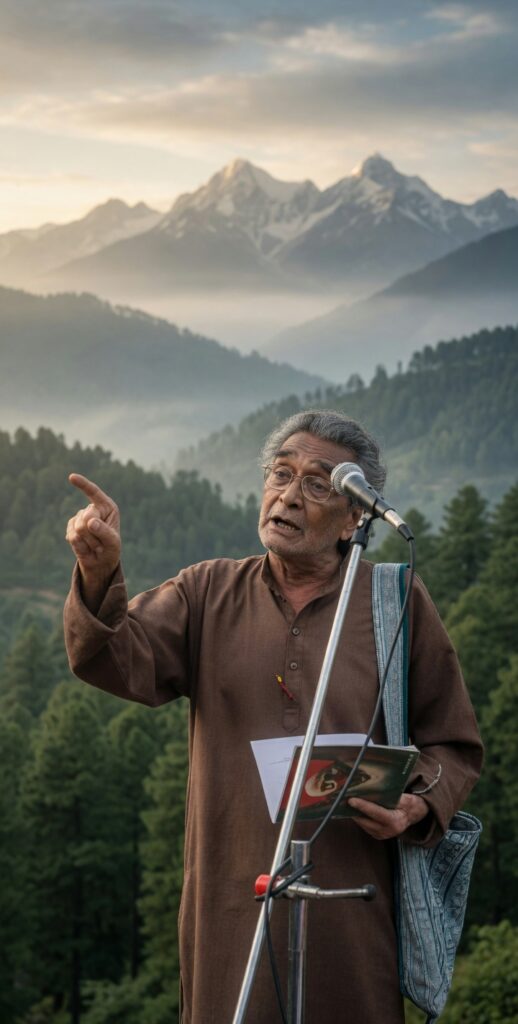
Girish Chandra Tiwari, also known as Girda, is the poet behind the song “Uttarakhand Meri Matrubhoomi, Matrubhoomi, Meri Pitru Bhoomi.” Girish Chandra Tiwari, also known as Girda, was born in September 1945 in Jyoli, a village in the Hawalbag block of the Almora district of Uttarakhand. His father’s name was Hansadatt Tiwari and his mother’s name was Jeevanti Tiwari. Girda was the youngest of five siblings. Girda received his primary education in Hawalbag, after which he moved to Almora for high school. After graduating from high school, Girda returned to his village, Jyoli, and began doing household chores. He then completed his intermediate degree. After leaving his village, Jyoli, Girda worked various jobs. He drove a rickshaw in Lucknow, Aligarh, Pilibhit, and Puranpur, and also worked as a work-in-charge and watchman for the Public Works Department (PWD). Gradually, Girda developed a passion for Urdu poetry, and began learning Urdu with the help of experts, buying Urdu books sold on the footpaths. Under this influence, he, along with his friend Durgesh Pant, resolved to publish Kumaoni books. In 1967, Girda came in contact with Brijesh Lal Shah, an expert on folk music and literature. He was deeply impressed by Girda’s talent. Thanks to him, Girda secured a job with the Government of India’s Song and Drama Division, Nainital. Prior to his employment, he played the dholak and harmonium. Later, he began writing and directing scripts. During his tenure, his books, songs, plays, and talks began to be broadcast on All India Radio, particularly his involvement with the Uttarayan program on All India Radio, Lucknow. Girda took voluntary retirement from the Government of India’s Song and Drama Division in 1996. Girda’s active participation in public movements began with the demonstration in Nainital against the auction of forests on November 27, 1977. In this public demonstration, Girda rewrote the poem “Vrikshan ko Laap” written by Gauri Dutt Pandey in 1926 with a new tone and sharp words. During the movement, Girda and several of his comrades were arrested and imprisoned in Haldwani jail. Girda’s writings were widely recognized in the 1977 Forest Save Movement in Uttarakhand, the 1948 “Nasha Nahi Rojgar Do” movement, and the 1994 Uttarakhand movement. Furthermore, Girda actively participated in every movement thereafter. But on August 22, 2010, Girda’s voice suddenly fell silent forever. Girda departed from this world, leaving us all behind. During the Uttarakhand movement, Girda’s songs infused new enthusiasm into Uttarakhand society. His writings served to awaken the society. Girda lived his life in accordance with the kind of literature he created, like Neta Umar. He himself was a powerful vehicle for spreading his songs and poems to the masses, and these songs quickly transformed into folk songs, taking the form of theme songs for mass movements. Working on the multifaceted aspects of social life, Girda wrote numerous works, including “Shikharao Ke Swar” (a 1969 collection of Kumaoni poems) with Durgesh Pant, “Hamari Kavita Ke Ankhar” (1977) with Shekhar Pathak, “Rang Daari Diyo Ho Albelin Mein” (a Holi collection, 1999), and Uttarakhand Kaavya (poems composed during the Uttarakhand movement), which were recited continuously for 53 days from Nainital with the Uttarakhand Bulletin in 2002. These are his published works. In addition, Girda translated numerous poetic works from Kumaoni, Garhwali, Urdu, and Hindi. Through Jagar cassettes, he transformed the poetic expressions of Hindi, Urdu, Kumaoni, and Garhwali languages ​​into folk songs and disseminated them among the people of Uttarakhand. He wrote plays like “Nagade Khamosh Hai” and “Dhanush Yagya.” He successfully directed plays like “Andha Yug,” “Andheri Nagari Chaupat Raja,” and “Thank You Mr. Glad.” He also wrote and directed numerous street plays, including “Mohil Mati,” “Ram,” “Krishna,” and Holi compositions for the Song and Drama Division of the Government of India. Girda became a powerful voice for the people, fighting against social oppression. Therefore, he was never confined to the boundaries of Garh-Kumaon. In the true sense, he was a mobile school of mass movements.

Uttarakhand’s People’s Poet Girish Chandra Tiwari ‘Girda’: Early Life, Education, and Struggle.. Read More »

From Young Dreams To Village Roots : Rohit Chauhan

From Young Dreams To Village Roots : Rohit Chauhan

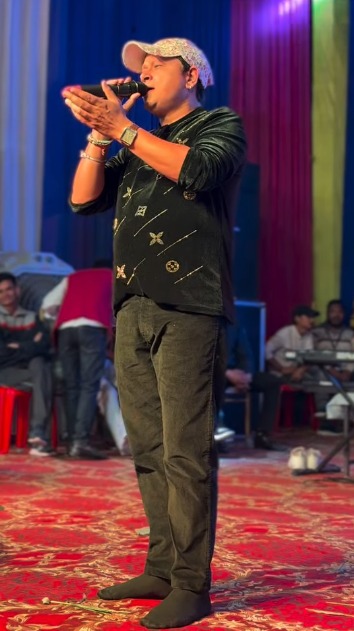
Famous Uttarakhand singer Rohit Chauhan is a well-known face among Garhwali singers. He has been spreading the magic of his voice since a young age. His songs appeal to people of all ages. He won hearts at a young age with his singing, and his first Garhwali album, released in 2005, was well-received. Rohit Chauhan was born on April 10, 1995, in Noida. His father, Rajendra Chauhan, is a music director, while his mother, Kalpana Chauhan, is one of Uttarakhand’s most renowned singers. Despite being born in Noida, Rohit Chauhan has given recognition to Uttarakhand and its music. Pahad Chhutige , sung by Rohit Chauhan, is a song that tells the story of a child who leaves his village to pursue his dreams and then misses it. Among Rohit Chauhan’s most famous songs as a child artist, Gori Mukhudi Sajili is the most popular. Rohit Chauhan is also known as the one who set a new trend in Garhwali songs in Uttarakhand. As a child, he performed in many stage shows with his mother. During one of his recent shows, he performed and sang a duet with the world-famous Urvashi Rautela. He presents traditional Pahari music with a modern twist that is being enjoyed by people of all ages.

From Young Dreams To Village Roots : Rohit Chauhan Read More »

From Tehri to T-Series: The Inspiring Journey of Uttarakhand’s Folk Star Gajendra Rana

From Tehri to T-Series: The Inspiring Journey of Uttarakhand’s Folk Star Gajendra Rana

Uttarakhand has been the birthplace of many famous and talented singers. One such name is Gajendra Rana, who is considered one of Uttarakhand’s most popular singers. People love his songs very much and his songs often become the life of every party. He is popular among people of all ages, including the youth. Uttarakhand folk singer Gajendra Rana was born on July 8, 1988, in Delhi. However, soon after his birth, his family returned to their ancestral village in Tehri. He completed his primary education in Tehri. Gajendra Rana was the youngest of five brothers, which led him to decide to pursue a career in music. People say that Gajendra Rana had very little opportunity to advance in Uttarakhand music, but they had no idea that he would one day achieve fame among Uttarakhand’s folk singers. Gajendra Rana’s Garhwali songs are very popular among the youth of Uttarakhand. Gajendra Rana’s famous songs include Leela Ghasyari and Rani Ghusryani. Another superhit song of his, Babli Tera Mobile, was a huge hit with the younger generation. He brought a new change to the Garhwali music industry, presenting a perfect blend of modernity and tradition. His hard work paid off when he was signed by T-Series. To this day, he continues to entertain his fans with his vibrant music. People always eagerly await his new albums, but his journey wasn’t easy. Although his albums were well-received, their sales were far below expectations. There was a time when he lost all hope and even considered leaving the music industry. At that very moment, Leela Ghasyari emerged as a ray of hope for him. Since then, he has never looked back. Today, he enjoys immense fame and recognition not only in Uttarakhand but across the world.

From Tehri to T-Series: The Inspiring Journey of Uttarakhand’s Folk Star Gajendra Rana Read More »

The History of Hemkund Sahib, Which Opened Its Doors on May 23

The History of Hemkund Sahib, Which Opened Its Doors on May 23..

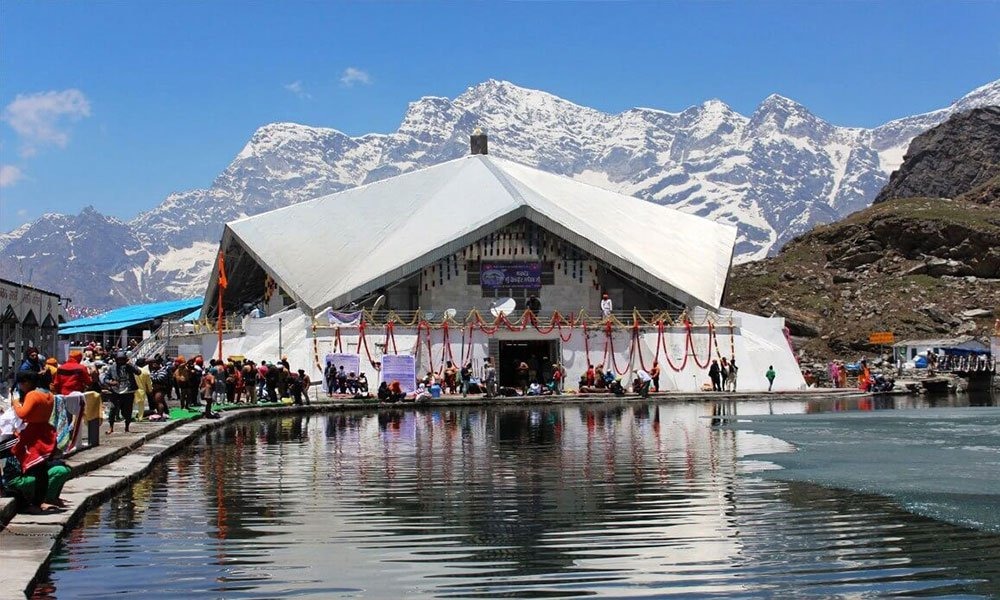
The doors of Hemkund Sahib were opened to devotees on May 23rd with due ceremonial ceremonies. Hemkund Sahib is located at an altitude of over 15,000 feet above sea level in the Himalayan mountain range in the Chamoli district of Uttarakhand. Shri Hemkund Sahib has emerged as a popular center of Sikh pilgrimage, considered one of the highest Sikh pilgrimage sites. Thousands of devotees visit the shrine every year after the doors open. Hemkund, meaning “lake of ice,” refers to the glacial lake located near the shrine. The site is also known as Lokpal Lake. 10th Guru meditated here in his previous life The history of Hemkund Sahib is intertwined with the traditions of both Sikh and Hindu religions. According to Sikh belief, the 10th Guru, Guru Gobind Singh, meditated here in his previous life as Ram, a warrior. It is believed that he sought peace and spiritual enlightenment in this beautiful and secluded valley, away from worldly distractions. According to Hindu belief, it is named after the Hindu god Vishnu. Legend has it that Lakshmana, Lord Rama’s brother, came here seeking healing after being injured. Another legend holds that Lakshmana’s previous birth was as a seven-headed serpent, where a serpent named Sesnag performed penance to Lord Shiva. During that penance, Lord Vishnu sat on the serpent. In the modern era, the existence of this pilgrimage site became widely known when Bhai Santokh Singh brought it to the attention of the Sikh community in the 20th century. He is said to have rediscovered the site in the 1930s, which had been lost over time. Since then, Hemkund Sahib has gained immense popularity and has become a sacred destination for pilgrims, mountaineers, and adventurers. After collective efforts by the Sikh community, a grand gurdwara was built at this place, known as Hemkund Sahib.

The History of Hemkund Sahib, Which Opened Its Doors on May 23.. Read More »

Remembering Sunderlal Bahuguna, the great environmentalist on his death anniversary..

Remembering Sunderlal Bahuguna, the great environmentalist on his death anniversary..

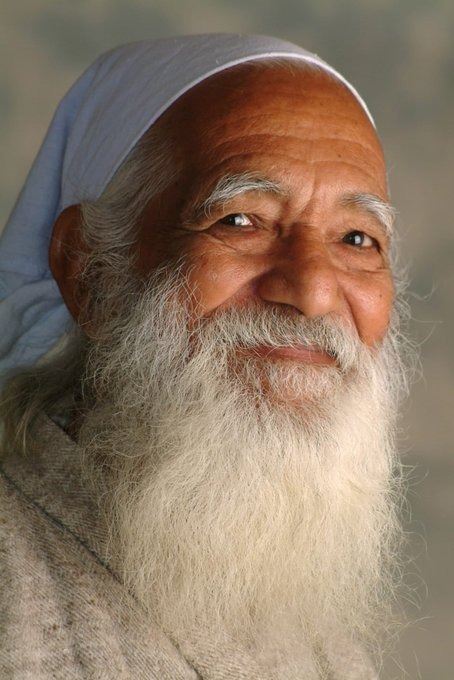
Today is the death anniversary of Sunderlal Bahuguna, the inspiration behind the Chipko movement and a great environmentalist. Uttarakhand Chief Minister Pushkar Singh Dhami and Maharashtra Chief Minister Dr. Mohan Yadav paid tribute to him on this occasion. Sunderlal Bahuguna was an Indian environmentalist and leader of the Chipko movement. He fought tirelessly for the conservation of Himalayan forests. He remained a member of the Chipko movement throughout the 1970s and later led the anti-Tehri Dam movement from the 1980s until early 2004. Bahuguna was one of India’s earliest environmentalists, and later, he and others associated with the Chipko movement began to raise broader environmental issues, such as opposition to large dams. Sunderlal Bahuguna’s early life: He was born on January 9, 1927, in Maroda village near Tehri district, Uttarakhand. He claimed at a ceremony in Kolkata that his ancestors, named Bandopadhyay, had migrated from Bengal to Tehri 800 years ago. Bahuguna began organizing hill women in his anti-liquor campaign from 1965 to 1970. He began social activities at the age of 13 under the guidance of Shri Dev Suman, a nationalist who spread the message of non-violence. Sunderlal Bahuguna adopted Gandhian principles in his life and married his wife, Vimla, on the condition that he would live among the villagers and establish an ashram in the village. Inspired by Gandhi, he trekked through the Himalayan forests and hills. The Chipko Movement, which is still considered a major step towards environmental protection, is considered an inspiration for Sunderlal Bahuguna. The Chipko Movement was a historic environmental and forest conservation movement that took place in the Chamoli district of Uttarakhand in 1973. In the Himalayan villages of Reni and Mandal, rural women embraced trees, or clung to them, to prevent them from being cut down by outside contractors. This movement earned it the name Chipko Movement. Prominent figures who brought this movement to prominence include Gaura Devi, Sunderlal Bahuguna, and Chandi Prasad Bhatt. This movement not only saved the Himalayan ecosystem from destruction but also laid the foundation for global environmental awareness. The pressure from this movement forced the then-central government to ban deforestation. In addition to the Chipko Movement, Bahuguna also strongly opposed the construction of the Tehri Dam, for which he embarked on a hunger strike for 84 days. He continued his fight against the Tehri Dam until the very end, and his own house was submerged in the Tehri Dam’s reservoir. He also strongly opposed the Tehri monarchy, for which he was imprisoned. Sunderlal Bahuguna walked approximately 4,875 kilometers from Kashmir to Kohima to spread awareness about the Himalayas and environmental conservation. For his outstanding contributions to environmental conservation, he was awarded the He passed away on May 21, 2021, from COVID-19 at the age of 94. However, his ideals for environmental conservation continue to inspire the world.Send feedback

Remembering Sunderlal Bahuguna, the great environmentalist on his death anniversary.. Read More »

Fusion of Uttarakhand traditional attire, Positive or Negative

Fusion of Uttarakhand traditional attire, Positive or Negative

The traditional attire of Uttarakhand is known for its beauty and cultural identity. Now a days the traditional outfit are being used with modern dresses to create a new fashion trend this allows for a beautiful blend of tradition and modernity. In today’s time traditional wear is no longer limited to culture but has also become an important part of modern fashion. Traditional clothing of Uttarakhand such as ghagra, Paranda, Nathula, pahunchi, guloband, angadi et cetera are being fused with modern dresses to create a new fashion identity. Many people see this fusion as a way to preserve culture and connect youth with their tradition while some people have also show negative reactions. Recently, uttarakhand’s famous folk singer Priyanka Meher wore a modern fusions skirt made from a traditional Pahari Paranda during her life concert. Meanwhile, Uttarakhand popular influencer Gaurav Lekhwar also known as Pahadi bhauji also feature the Pahari Paranda print on his shirt people’s reaction to this were mixed many praised this modern fusion while other file that it hot their sentiments. In today’s modern era people are using traditional attire as a fashion statement. Elders believe that traditional clothing has a certain sentiments and changing it into Western style diminishes its significance. On the other hand, some believe that fusing traditional attire may lead to losing the Identity of our native culture and, In some cases wearing traditional jewellery with inappropriate western clothing also raises questions.The the Kumaoni pichhora is a traditional and sacred garment of the women of The Kumaon region in Uttarakhand which is not just a dupatta but a symbol of married women. It is also a symbol of women’s identity ,culture and good fortune. Nowadays people can be seen using it in dance videos and fashion content on social media.This makes it clear that traditional attire is no longer limited to religious and cultural occasions but has also become a part of modern fashion and social media culture.

Fusion of Uttarakhand traditional attire, Positive or Negative Read More »

"Jagar Samrat"-Pritam Bharatwan, who spread Jagar Vidya from Uttarakhand to abroad

“Jagar Samrat”-Pritam Bharatwan, who spread Jagar Vidya from Uttarakhand to abroad

Pritam Bharatwan is a folk singer from Uttarakhand. He is also known as the “Jagar Samrat” in Uttarakhand. He was born on September 17, 1970, in Sila village, Dehradun. Born into an Oji family, he inherited a musical heritage. In the hilly areas of Uttarakhand, most Oji families invoke deities through mountain songs known as Jagar. Pritam Bharatwan belongs to one of these families. He would occasionally accompany his father on special occasions to sing. Pritam Bharatwan received his schooling from his village school. From childhood, he was drawn to folk songs and musical instruments, and he enjoyed learning instruments more than studying. Pritam Bharatwan’s father, Hem Bharatwan, was his music guru, who gave him his initial musical training. He completed his further education at the Sangeet Vidyalaya, Rishikesh. Although he had been singing since childhood, his popularity came thanks to his uncle, who, exhausted at a function, handed Pritam Bharatwan the microphone for public performances. At just 12 years old, his Garhwali song collection enchanted his voice, and his Jagar performances were so popular that he became known as the “Jagar Samrat.” In 1988, he joined All India Radio and conducted radio programs for several years. He also mastered the Damau, Hudka, and Thakuli. His first success came with his debut cassette, “Taunsa Bou,” released by Rama Cassettes. He gained even greater popularity with his song “Saruli Meru Jiya Lagige.” Narayani, Paichhi Maya, Suber, Ross, Tumhari Khud, and Band Amravati have also been his super-duper hit albums. He has also brought recognition to Jagar Vidya from Asia to Europe, America, Canada, Germany, and Dubai. During his stay in the US, he introduced Americans to musical instruments like Dhol Damo at Cincinnati University in Ohio. The folk songs he sang, Jagar Pandavas, were published for the first time in 2010 by the Windsor administration in the form of a book titled Surj Kathiyon. Major Achievements and Honors He has been honored with numerous awards, including the Uttarakhand Vibhushan, Jagar Shiromani, Sur Samrat, and Himalaya Ratna. The Uttarakhand Open University, Haldwani, Kumaon, has honored him with an honorary title from the hands of the Governor. Bhagirath Putra Samman (2002) by Pravasi Uttarakhand Samaj, LudhianaUttarakhand Gaurav Samman (2002) by Delhi and national and international organizationsIn 2019, he was honored with the Padma Shri, one of the country’s highest civilian honors, by the President of India, Ram Nath Kovind, for reviving the Jagar Vidya and spreading it not only in Uttarakhand but also abroad.

“Jagar Samrat”-Pritam Bharatwan, who spread Jagar Vidya from Uttarakhand to abroad Read More »

From Delhi to Global Stage, The Inspiring Journey of Uttarakhand’s Singing Sensation Meena Rana

From Delhi to Global Stage, The Inspiring Journey of Uttarakhand’s Singing Sensation Meena Rana

Meena Rana, popularly known as the “Lata Mangeshkar of Uttarakhand” and the “Kokila of Uttarakhand,” is a renowned folk singer who has lent her voice to Garhwali, Jaunsari, and several other regional languages. She was born on May 25, 1975, in Delhi, into a Garhwali family. She completed her high school education in Delhi and later moved to Dehradun for further studies, where she finished her education at Girls’ Inter College, Mussoorie. As known for her melodious voice, Meena Rana began performing at the Akashvani Club in Mussoorie at the age of 16. Her husband, Sanjay Kumola, is the owner of Surbhi Multi Track Sound Studio. Meena Rana got her first break in the Garhwali music industry in 1992 through the Garhwali film Nauni Pichadi Nauni, alongside folk singers Mani Bharti and Pooran Singh Rawat. In the film, she sang popular songs such as Biwanu Sheru Ma, Baith Dola Ladi, and Jado Ni Chhav Mi. Over the years, she has sung in several popular Uttarakhand albums, including Chand Taro Ma, Meri Khati Meethi, Darbar Nirala Sai Ka, Uttarakhand Garhwali Teri Meri Maya, Meru Uttarakhand, Mohana, Chandra, and Lalita Chi Hum. She has also collaborated with renowned Uttarakhand singers such as Narendra Singh Negi, Pritam Bharatwan, Lalit Mohan Joshi, Anil Bisht, Gajendra Rana, and Manglesh Dangwal. Apart from Garhwali and Kumaoni, Meena Rana has recorded more than 500 songs in languages including Jaunsari, Jaunpur, Bhojpuri, Rajasthani, Kargali, Balti, and Hindi. Through her live shows and musical performances, she has played a significant role in promoting Uttarakhand’s folk music on both national and international platforms. She has also performed in countries such as Oman, Australia, and the United Arab Emirates. Major Awards and Achievements

From Delhi to Global Stage, The Inspiring Journey of Uttarakhand’s Singing Sensation Meena Rana Read More »

From Fields to Fame, Kamla Devi Becomes the Voice of Uttarakhand Folk Music

From Fields to Fame, Kamla Devi Becomes the Voice of Uttarakhand Folk Music

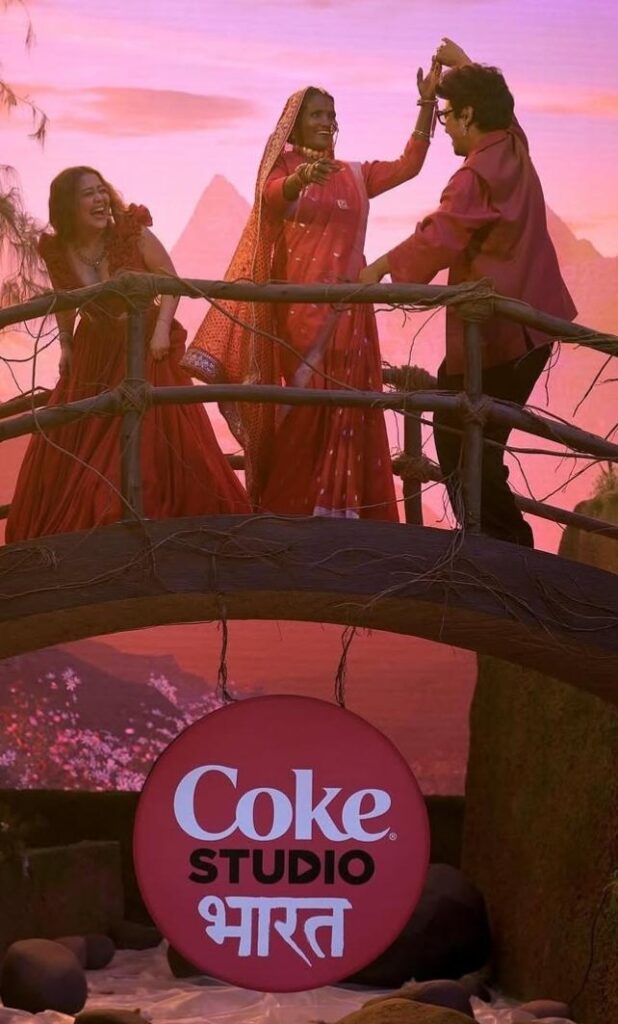
Kamla Devi was born in 1974 in Lakhani village of Bageshwar, Uttarakhand, into a humble farmer’s family. Her childhood was spent helping with agricultural work, and she got married at the age of 15. Alongside working in the fields, she continued practicing her singing. Kamla Devi inherited her musical talent from her father, Veera Ram, who himself was a traditional Jagar folk singer. Her life was full of struggles. Due to financial difficulties, she worked at a roadside dhaba in her early years while also supporting her family. Her husband earned a living through daily wage labor. Her journey toward success began when renowned Uttarakhand folk artist Shiro Mani Pant heard her voice and gave her the opportunity to perform on stage for the first time. Through her traditional folk singing, she gained recognition at the national level. She became the first folk singer from Uttarakhand to be invited to “Coke Studio Bharat.” She sang the Kumaoni folk song “Sonchadi” alongside Neha Kakkar and Digvijay Singh, which was released in 2024. The song received more than 1.5 million views on YouTube, earning her nationwide recognition. She is regarded as one of the leading voices promoting the folk music and cultural heritage of Uttarakhand. Apart from “Sonchadi,” she won people’s hearts with several popular songs such as “Teele Dharo,” “Chanara Bouji,” “Rajula Malushahi,” “Ghasiyari,” and the cultural folk song “Lagni Gham.” She has also been appreciated on various cultural platforms for her contribution to folk music. Kamla Devi has been honored with the “Nanda Shakti Samman 2024” and the “Himalaya Shri Award 2026.” She has been singing traditional folk songs of Uttarakhand for nearly 40 years. According to her, this art is not merely a form of singing but also a way to preserve and keep alive the cultural heritage of Uttarakhand.

From Fields to Fame, Kamla Devi Becomes the Voice of Uttarakhand Folk Music Read More »