
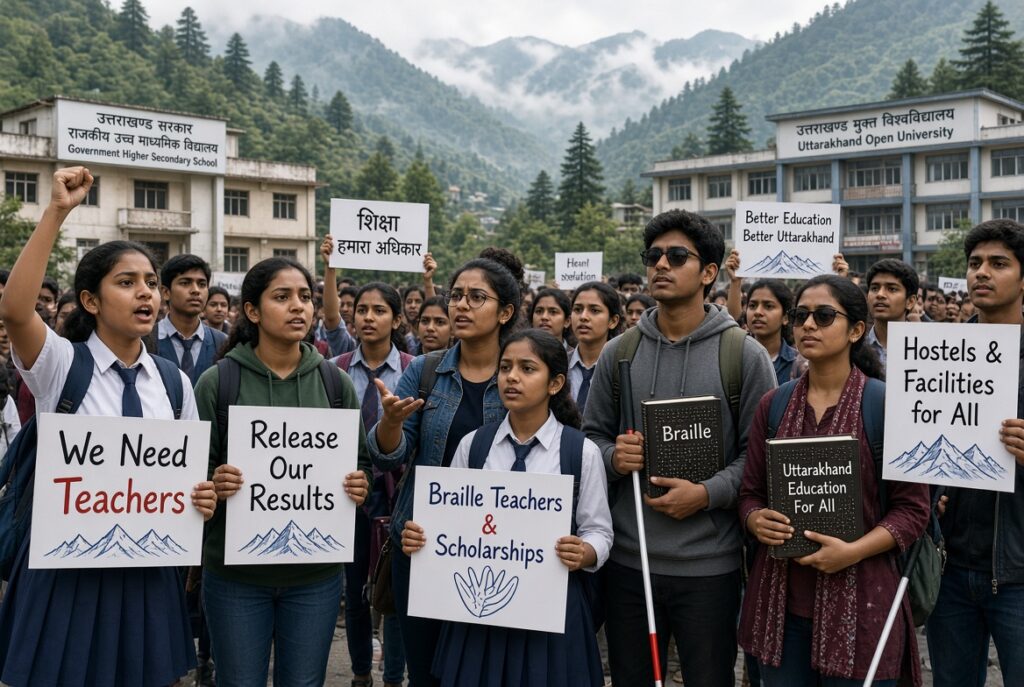
A combined look at the events of the past few weeks in Uttarakhand paints a clear picture of dissatisfaction with the education system. This isn’t just a story of youth anger; rather, everyone from schoolgirls to university students and visually impaired students are raising their voices about their own problems. In some places, there are no teachers, in others, exam results aren’t being released on time, and in others, students are protesting demanding scholarships, Braille teachers, hostels, and essential facilities. The questions are different, but the concern is the same: is the education system providing students with the facilities and opportunities they expect?
A Voice Raised from Dehradun to Betalghat
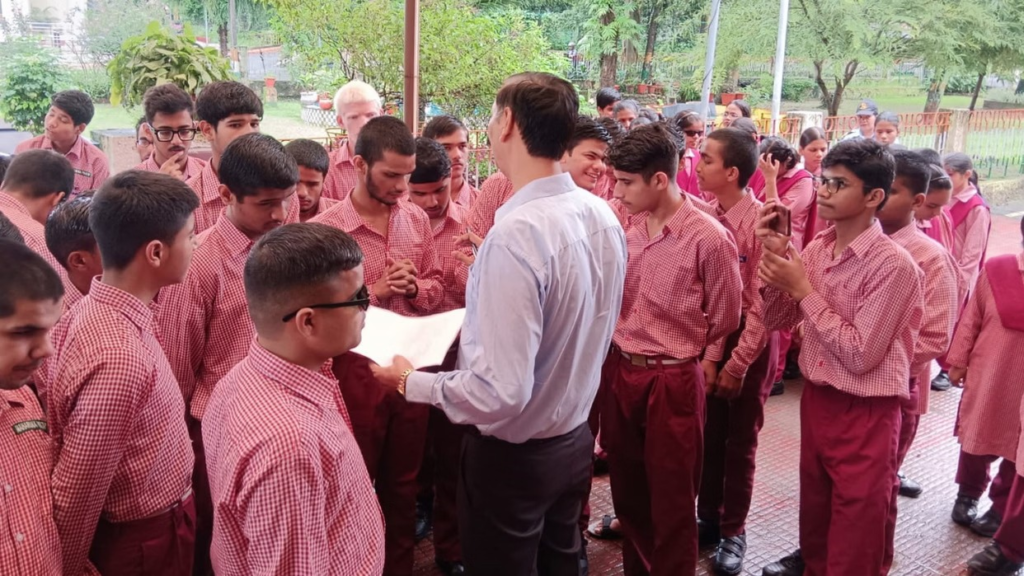
The protest by visually impaired students at the Model School for Visual Disabilities of the National Institute for the Empowerment of Persons with Visual Disabilities (NIEPVD) in Dehradun is a reflection of this larger question. The students raised demands such as the restoration of merit and institutional scholarships, the provision of laptops as promised, improvements in hostel and cafeteria facilities, the appointment of permanent administrative officers, and the resolution of the shortage of Braille teachers in primary classes. Along with the timely availability of English-medium textbooks, they also demanded the provision of mobility instructors, female physical training instructors, medical staff, and hostel wardens. The issue is serious because these are students for whom Braille education, mobility training, and support facilities are fundamental to their education and self-reliance, rather than an extra extra. The protest ended after receiving a written assurance from the institution.
Similarly, students of the Government Girls Inter College in Betalghat, Nainital, protested over vacant teaching positions. For girls studying in grades 10th through 12th, the teacher shortage isn’t just a matter of free periods. It can impact everything from board exam preparation to further studies and competitive exams. Government schools in the hills already face limited resources, and the lack of subject-specific teachers poses another challenge for students. The girls’ protest on the streets also indicates that students no longer want to confine their problems to the confines of their school walls.
Delay in results increases students’ anxiety
The student protests at Uttarakhand Ayurveda University and its affiliated colleges highlight another aspect of the education system. Students from various Ayurveda colleges in Dehradun and Haridwar protested over 10 demands, including conducting exams on time and releasing pending exam results. The situation escalated when four students climbed a water tank during the protest. Later, after speaking with a government minister, the students ended their protest. The students’ anger is understandable because the impact of delayed exams and results in professional courses is not limited to just one semester. It can impact the entire schedule for further studies, internships, admissions, and careers. Students had already protested in August over similar issues, and their anger surfaced again in early September.
Different demands, but the same question.
The girl students of Betalghat need teachers, timely results for Ayurveda students, and Braille teachers, scholarships, and necessary facilities for students with disabilities. The demands are varied, but at the core of all of them is a concern for the right to education and a better future.