Hillywood

Sea of Devotion at Danda Devrana Jatra: Thousands Seek Rudreshwar Maharaj’s Blessings in Rawain Valley

Sea of Devotion at Danda Devrana Jatra: Thousands Seek Rudreshwar Maharaj’s Blessings in Rawain Valley

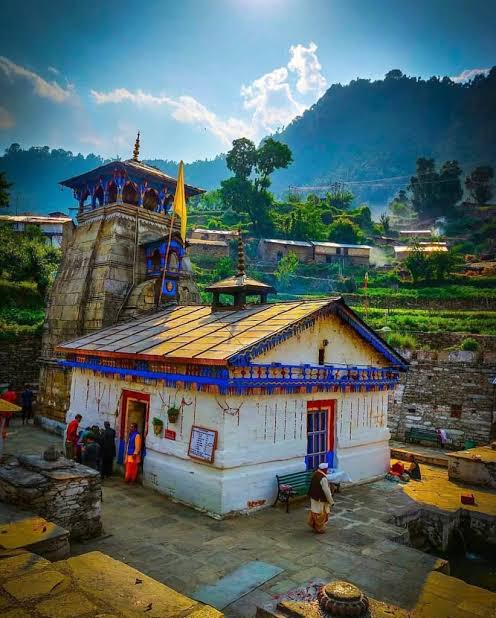
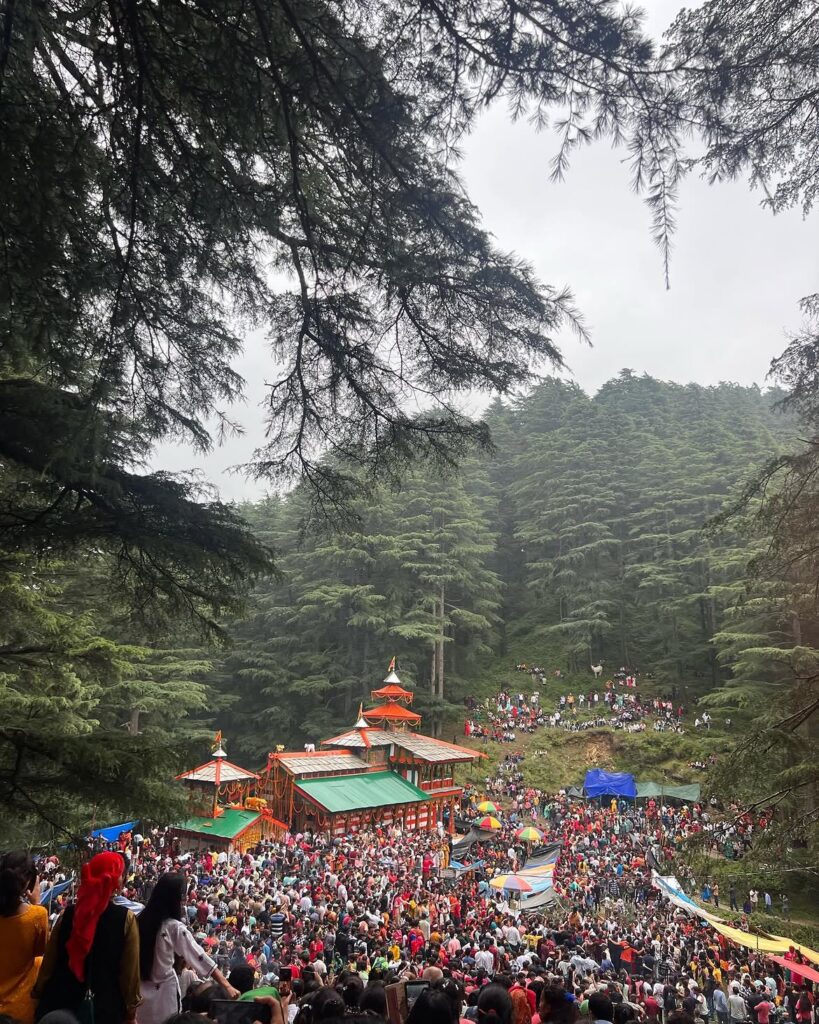
The famous Danda Devrana Fair (Danda ki Jatra) was held on July 1st in Devrana village in the Rawani Valley of Uttarkashi district, Uttarakhand. Thousands of devotees gathered at the fair. Devotees from 65 villages in the Rawani, Jaunpur, and Jaunsar regions travelled from far and wide to visit Rudreshwar Maharaj (a local form of Shiva) at the temple. Surrounded by dense pine forests, this sacred site, situated at an altitude of approximately 2,500 meters, offers a unique blend of faith and folk culture. Devotees in traditional attire dance to the beats of dol and damaus to welcome the deity’s palanquin. After seeing Rudreshwar Maharaj, who is bathed with milk by priests, devotees make wishes and seek blessings for happiness and prosperity. According to local folklore, in ancient times, the power of Rudreshwar Mahadev came with the porters of Rawani while they were returning from Chakrata carrying goods. This divine power vanished upon reaching home. Later, a farmer in Bajladi village found an idol of Rudreshwar Mahadev while plowing his fields, and it was installed in Devrana village. Another legend suggests that Rudreshwar Maharaj was once a king who came from Kashmir to the Rawani region and settled there. This ancient temple in Devrana has been a center of faith for centuries, where the Danda Devrana Fair (Danda ki Jatra) is held annually in the month of Ashadha. This fair symbolizes the centuries-old tradition of the Rawani Valley. The fair features cultural programs and collective worship, strengthening the region’s unity and faith. This fair holds not only religious significance but also serves as a medium for preserving Garhwal’s folk culture
Sea of Devotion at Danda Devrana Jatra: Thousands Seek Rudreshwar Maharaj’s Blessings in Rawain Valley Read More »

Dayara Bugyal in Uttarakhand Faces Growing Crisis as Landslides and Subsidence Worsen

Dayara Bugyal in Uttarakhand Faces Growing Crisis as Landslides and Subsidence Worsen

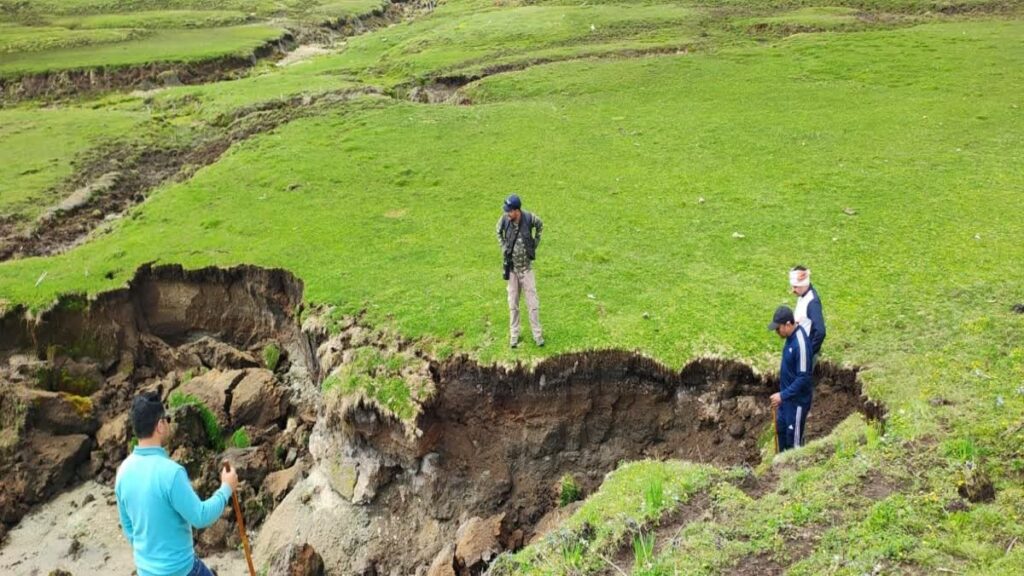
The world-famous Dayara Bugyal, located in the Uttarkashi district of Uttarakhand, is currently experiencing landslides and subsidence due to incessant rainfall, which is becoming a growing concern. The Forest Department has also geared up to address this. Deep ravines have formed throughout this 406-hectare Himalayan grassland (Bugyal). This not only threatens the Bugyal’s biodiversity and natural beauty, but also the annual influx of silt into the Papadgaad Valley, causing rapid subsidence in the lower areas of Dhiyana, Barnala, Goi, Naheta, and Chilpara, creating large ravines that are increasing the risk of disasters. Villagers say that the threat of landslides has persisted since the 2012-2013 disaster. However, in the past two to three years, soil erosion has caused trenches to form in Naheta and Chilpara, near Dhian Bugyal. The debris flowing from here flows into the Papadagad River every year, causing a disaster. Similarly, in the dense forests of Naheta, forest resources are being damaged due to subsidence and landslides. In 2020, the Forest Department, in collaboration with the Wildlife Institute of India and USAC, attempted to prevent this by constructing eco-friendly care nets made of jute and coconut fibers and check dams made of sawdust in an area of ​​approximately 600 meters. This was successful in that area. However, in 2024 and 2025, the highest number of landslides and landslides were observed in other Bugyal areas, including Naheta and Chilpara.

Dayara Bugyal in Uttarakhand Faces Growing Crisis as Landslides and Subsidence Worsen Read More »

''Namkwali'' -The taste of Uttarakhand

”Namkwali” -The taste of Uttarakhand

Namak Wali, a renowned organic brand from Uttarakhand, was started by Shashi Bahuguna Raturi. This brand produces traditional pishyu lun (salt) by grinding Himalayan herbs, spices, and natural salt on a grinding stone. This salt is unlike regular salt. it is seasoned with various flavorful mountain ingredients like garlic, ginger, and hemp seeds, and is hand-ground. She explained that in 2018, carrying forward her family’s legacy, she launched a brand called “Namak Wali,” introducing the ground salt nationwide. Shashi Bahuguna Raturi, known as “Namak Wali,” produces flavored mountain salt, Badri cow ghee, and traditional spices and chutneys. Shashi Bahuguna Raturi says that with the advent of modern mixers, the traditional skill of grinding stone was disappearing, so she connected village women to this work to make them self-reliant. Today, the same brand provides employment to hundreds of mountain women and brings their skills directly to the cities. Namak Wali received nationwide acclaim for its excellent taste and women’s empowerment initiatives by appearing on the national platform of “Shark Tank India.” This salt has been produced in Uttarakhand homes for generations, ground by women manually on a grinding stone. Water is not used in the salt, preserving the authentic flavor and aroma of the herbs. Shashi Bahuguna Raturi started her business with just a thousand rupees, but today her business has grown to a multi-million dollar business, and after appearing on a popular TV show, she gained immense popularity across the country. Namak Wali also offers a mobile app through which anyone can purchase and track their produce and orders. Benefits of Salt

”Namkwali” -The taste of Uttarakhand Read More »

Madhyamaheshwar: The Sacred Himalayan Shrine of Lord Shiva’s Nabhi – Second Among the Panch Kedars

Madhyamaheshwar: The Sacred Himalayan Shrine of Lord Shiva’s Nabhi – Second Among the Panch Kedars

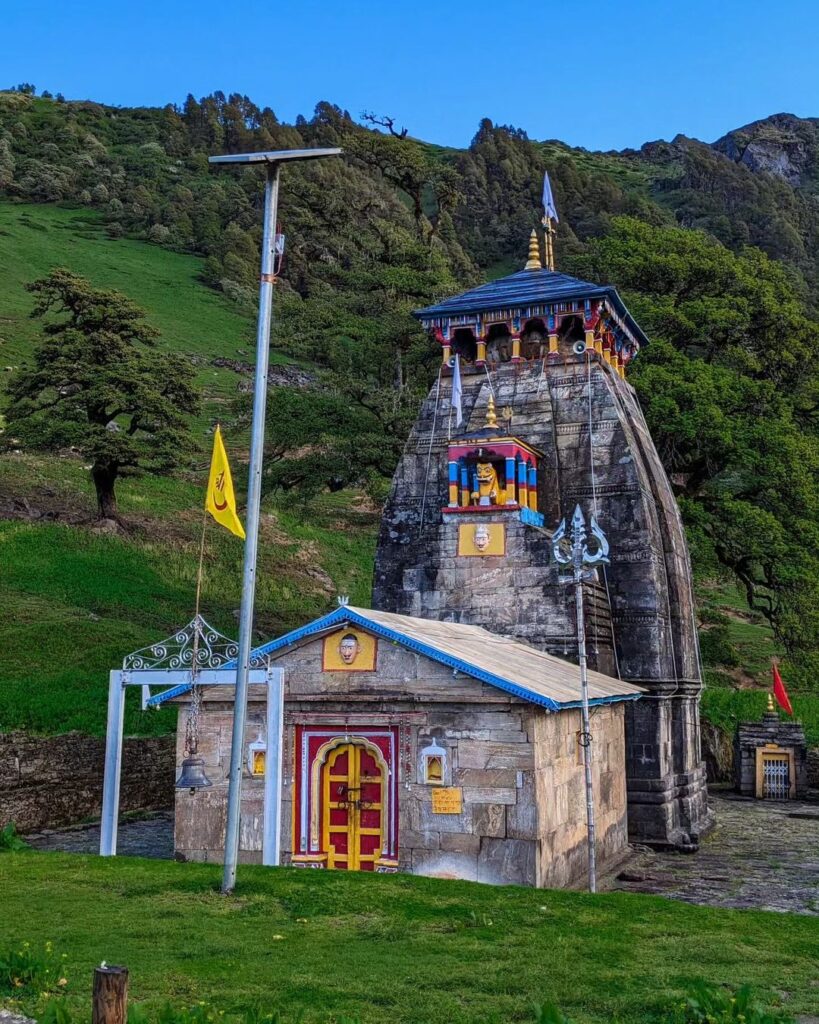
Madhyamaheshwar, dedicated to Lord Shiva and known as the second of the Panch Kedars, is a sacred shrine. Located in the lap of the Himalayas in the Rudraprayag district of Uttarakhand, the Madhyamaheshwar Temple is dedicated to the worship of Shiva’s “nabhi” (middle part), and its natural beauty and trekking routes attract numerous devotees and tourists. According to legend, after the Mahabharata war, the Pandavas came to the Himalayas to seek Lord Shiva’s blessings. When Shiva refused to grant them darshan, he disappeared in the form of a bull, and various parts of his body fell in different places; his middle part (nabhi) appeared at Madhyamaheshwar. At Madhyamaheshwar, Lord Shiva’s navel or middle part is worshipped, hence the name “Madhyam” + “Maheshwar.” It is believed that the Pandavas, the heroic figures of the Mahabharata, built this temple while searching for Shiva to atone for their actions. The temple is constructed in traditional and captivating Himalayan architecture, using stone. A self-manifested Shivalinga made of black stone is installed in its sanctum sanctorum

Madhyamaheshwar: The Sacred Himalayan Shrine of Lord Shiva’s Nabhi – Second Among the Panch Kedars Read More »

Jageshwar Dham: The Divine Abode of Lord Shiva Nestled Amidst Deodar Forests

Jageshwar Dham: The Divine Abode of Lord Shiva Nestled Amidst Deodar Forests

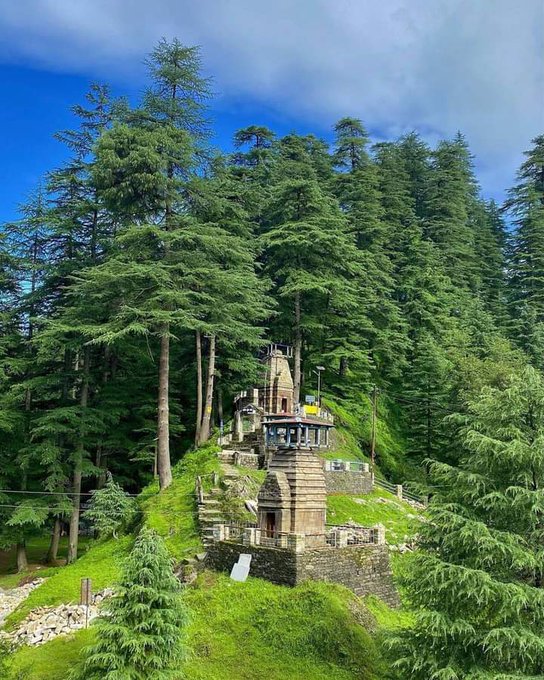
Situated at an altitude of approximately 1,870 meters above sea level in the Almora district of Uttarakhand, Jageshwar Dham is one of India’s most ancient and spiritual pilgrimage sites dedicated to Lord Shiva. Surrounded by towering Deodar trees, this sacred land lies on the tranquil banks of the Jata Ganga River; upon arrival, one immediately experiences a magnificent confluence of nature, history, and spirituality. Jageshwar Dham is not merely a single temple but a vast complex comprising over 125 ancient temples. Constructed primarily of stone, these temples feature the Nagara style of architecture, which remains an exquisite example of medieval Indian craftsmanship. The sound of temple bells ringing from all directions and the cool breeze blowing through the Deodar trees create an atmosphere of profound peace and divinity. Mythological Significance Jageshwar Dham holds a special place in Hindu scriptures. It is mentioned in the Shiva Purana as “Nagesham Darukavane,” a reference that many devotees associate with the eighth Jyotirlinga of Lord Shiva. Religious belief holds that this is the very place where Lord Shiva first accepted worship in the form of a Shivling. Consequently, this shrine has remained a center of unwavering faith for Shiva devotees for centuries. An Invaluable Historical Heritage Most of the temples at Jageshwar were constructed between the 7th and 18th centuries during the reigns of the Katyuri and Chand dynasties. Notable among them are the Shri Jageshwar Mahadev Temple, Mahamrityunjaya Temple, Kuber Temple, Dandeshwar Temple, and Pushti Devi Temple. The Mahamrityunjaya Temple is renowned for its unique architectural style and its massive Shivling. It is believed that worshipping Lord Shiva here grants protection against disease, fear, and untimely death. The Visit of Adi Shankaracharya It is believed that the great philosopher and saint Adi Shankaracharya visited Jageshwar Dham during his pilgrimage to Kedarnath. He oversaw the renovation of several ancient temples here and played a pivotal role in reviving the pilgrimage site’s religious traditions. Thanks to his efforts, Jageshwar Dham regained its status as a prominent pilgrimage site dedicated to Lord Shiva. Natural Beauty and Spiritual Serenity The defining feature of Jageshwar Dham is its natural setting. The surrounding dense deodar forests, the cool mountain breeze, and the soothing murmur of the Jata Ganga River instill a deep sense of peace. This is why pilgrims visit not only for worship but also to find mental tranquility and a profound spiritual experience. Travel Information Jageshwar Dham is located approximately 35 kilometers northeast of Almora town. It is easily accessible by road; the nearest major railway station is Kathgodam, and the nearest airport is Pantnagar. The best time to visit is between April and June and from September to November, when the weather is pleasant and favorable for travel. However, the religious atmosphere is at its most vibrant during the month of Shravan. Major Festivals Jageshwar Dham draws thousands of devotees during the Shravani Mela (monsoon festival) in the month of Shravan (July–August) and on the occasion of Mahashivratri. Special prayers, Rudrabhishek rituals, devotional singing (bhajan-kirtan), and other religious ceremonies are organized during these times, immersing the entire temple complex in an atmosphere of deep devotion to Lord Shiva. Why Visit Jageshwar Dham? If you wish to experience ancient history, magnificent temple architecture, natural beauty, and spiritual peace all in one place, Jageshwar Dham is an ideal pilgrimage destination. Its divine aura, serene environment, and centuries-old religious heritage leave an indelible impression on every traveler’s mind.

Jageshwar Dham: The Divine Abode of Lord Shiva Nestled Amidst Deodar Forests Read More »

Harela : An ancient mountain tradition of nature conservation

Harela : An ancient mountain tradition of nature conservation

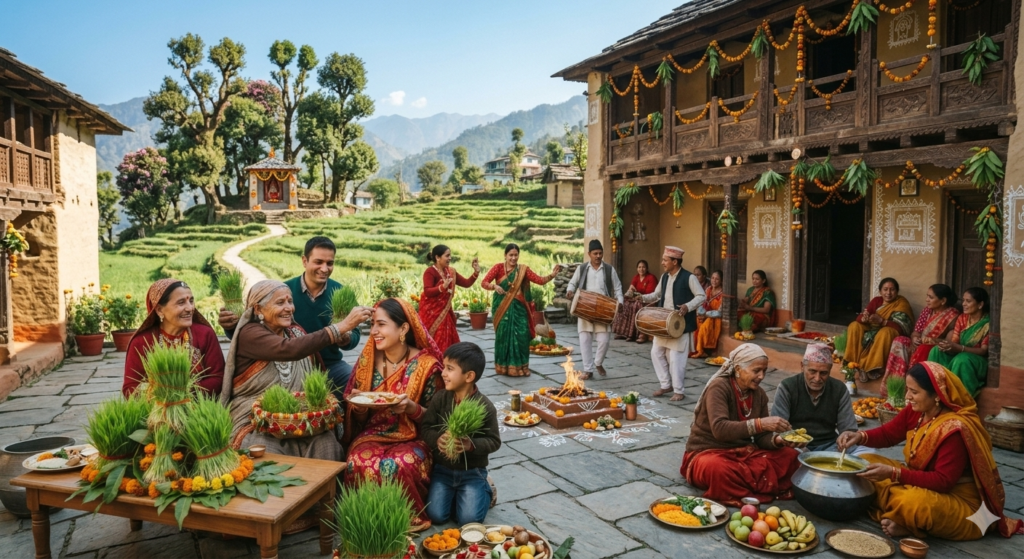
Harela is a major cultural and agricultural festival in Uttarakhand, considered a symbol of the arrival of monsoon and greenery. This festival is primarily celebrated on Karka Sankranti, the beginning of the Shravan month (Sawan) in July. People plant trees to protect the environment. The word Harela means “arrival of greenery,” which symbolizes the beginning of the sowing cycle and prosperity in agricultural regions. Nine days before this festival, five to seven types of grains, including barley, wheat, and maize, are sown in bowls or other utensils in homes. On the tenth day, the greenery is harvested and offered to the gods and goddesses. Elders place the greenery on the heads or ears of family members, blessing them with happiness, good health, and long life. According to traditional beliefs, this festival began with the marriage of Lord Shiva and Goddess Parvati. While Harela, celebrated in the month of Sawan, is also considered a symbol of the marriage of Shiva and Parvati, in many places, idols of Shiva, Parvati, and Kartikeya are made from clay and worshipped. In 2016, the Uttarakhand government and the Forest Department began celebrating this festival as Tree Planting Day across the state with public participation. On this day, shade-bearing and fruit-bearing trees are planted extensively in every school, college, government office, and village across the state. The Uttarakhand government has also declared this day a public holiday, and a message of environmental protection is also spread through large-scale tree planting throughout the state. Recently, a record was set for the festival, with over 800,000 trees planted in a single day. Additionally, the 2026 environmental campaign will be based on two main central and state-level concepts. The celebrations are being combined with major environmental conservation campaigns, such as the Prime Minister’s nationwide campaign “Ek Ped Maa Naam” and the Chief Minister’s “Celebrate Harela Festival, Repay the Debt to Mother Earth.” On July 16th, the Uttarakhand government is preparing to set a new record by planting over 500,000 trees in a single day across the state, announcing the planting of approximately 300,000 trees in the Garhwal region and 200,000 trees in the Kumaon region. Reports are also emerging that Uttarakhand communities living abroad will also celebrate this festival on a large scale in 2026. For example, the “Uttarakhand Organisation of New Zealand” is organizing a grand Harela Utsav 2026 in Auckland on July 18th, 2026, featuring performances of traditional Jhora and Chhapeli folk dances.

Harela : An ancient mountain tradition of nature conservation Read More »

The place where divine wedding took place : Triyuginarayan

The place where divine wedding took place : Triyuginarayan

Triyuginarayan, located in the Rudraprayag district of Uttarakhand, is a renowned and historic Hindu temple. It is celebrated as the site where the marriage of Lord Shiva and Goddess Parvati took place. Although primarily dedicated to Lord Vishnu—who presides here alongside Goddess Lakshmi—the temple holds immense significance due to the divine union of Shiva and Parvati. It is situated approximately 12 kilometers from Sonprayag and 25 kilometers from Guptkashi. Legend has it that Lord Vishnu performed the duties of Parvati’s brother during this divine wedding, while Lord Brahma officiated as the priest for the sacred rituals. A distinctive feature of the temple is the Akhand Jyoti (eternal flame) that burns continuously in front of the shrine; it is believed that this fire has been alight since the time of Shiva and Parvati’s wedding. The temple courtyard houses a sacred fire pit known as the “Akhand Havan Kund or Akhand Dhuni“. Devotees often take home the sacred ash from this pit, as it is considered a symbol of happiness and good fortune in married life. In front of the temple lies a sacred stone platform called “Brahma Shila,” which is believed to be the exact spot where the wedding ceremony occurred. The temple complex also features four sacred water pools—Rudra Kund, Vishnu Kund, Brahma Kund, and Saraswati Kund—where the gods are said to have bathed during the wedding procession of Lord Shiva. Due to its mythological significance, Triyuginarayan is gradually emerging as a popular and sacred wedding destination. In recent times, several prominent celebrities, television stars, and major industrialists have chosen this venue for their weddings. Triyuginarayan, located in the Rudraprayag district of Uttarakhand, is a renowned and historic Hindu temple. It is celebrated as the site where the marriage of Lord Shiva and Goddess Parvati took place. Although primarily dedicated to Lord Vishnu—who presides here alongside Goddess Lakshmi—the temple holds immense significance due to the divine union of Shiva and Parvati. It is situated approximately 12 kilometers from Sonprayag and 25 kilometers from Guptkashi. Legend has it that Lord Vishnu performed the duties of Parvati’s brother during this divine wedding, while Lord Brahma officiated as the priest for the sacred rituals. A distinctive feature of the temple is the Akhand Jyoti (eternal flame) that burns continuously in front of the shrine; it is believed that this fire has been alight since the time of Shiva and Parvati’s wedding.

The place where divine wedding took place : Triyuginarayan Read More »

The Chopta Valley -Mini Switzerland Of India

The Chopta Valley -Mini Switzerland Of India

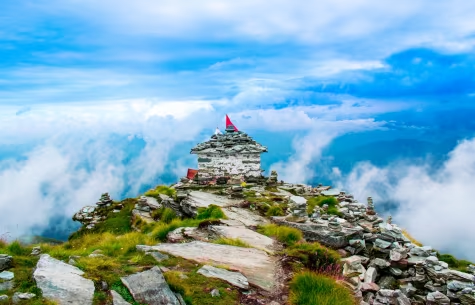
Chopta, a beautiful valley and hill station located at an altitude of 8,888 feet in the Rudraprayag district of Uttarakhand, is also known as Mini Switzerland. Nestled in the lap of the Garhwal Himalayas, it is a beautiful, serene, and pristine hill station. Known for its vast, lush green meadows, the meadows are completely covered in a blanket of snow during winter. This area is part of the Kedarnath Wildlife Sanctuary (bird watching), home to the colorful Monal and many rare bird. Lush green meadows and pleasant weather prevail between April and June, and snow-capped peaks are visible from October to January. Accommodation options include a radiation camp, Swiss tents, homestays, and small local guest houses, offering a feeling of being in the midst of nature. It is also a popular destination for tractors, with multiple trekking routes traversing through forests and meadows. A variety of different birds are also found here, making it popular for bird watching. Activities in Chopta Valley Main Attractions in Chopta Valley

The Chopta Valley -Mini Switzerland Of India Read More »

“Carry Me Back”: Pilgrims Carry 2 Tons of Waste Down from Kedarnath to Keep Dham Garbage-Free

“Carry Me Back”: Pilgrims Carry 2 Tons of Waste Down from Kedarnath to Keep Dham Garbage-Free

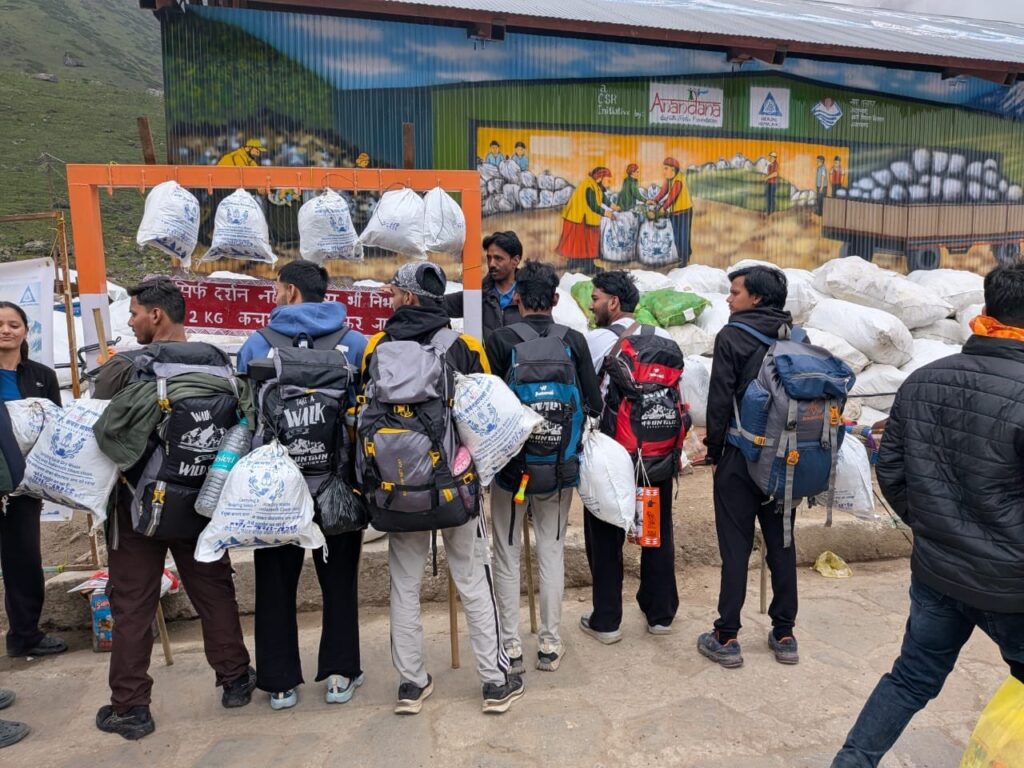
The “Carry Me Back” campaign is being launched to protect the environment and keep Kedarnath Dham clean, beautiful, and garbage-free. The campaign is being conducted by the Rudraprayag District Administration and is receiving widespread support from devotees. So far, approximately 2 tons of garbage has been brought to Gaurikund from the Dham area. This campaign is being conducted under the guidance of Rudraprayag District Magistrate Vishal Mishra, with the joint efforts of the Nagar Panchayat Kedarnath, the Healing Himalaya Foundation, and Sulabh International. Under the campaign, pilgrims are being encouraged to bring back plastic, empty water bottles, food wrappers, and other waste they bring with them, instead of leaving them at the Dham. This awareness campaign is being continuously run by personnel and volunteers deployed along the pilgrimage route and at Kedarnath Dham, and its positive impact is clearly visible. The “Carry Me Back” campaign is an initiative aimed at encouraging pilgrims visiting Kedarnath Dham to avoid leaving behind anything that could later become garbage, pollute, and destroy the environment. The pilgrims participating in this campaign are helping in bringing the dry waste to the designated collection centres in Gaurikund. The district administration has appealed to all the pilgrims to become active participants in preserving the sanctity of Kedarnath Dham and the natural heritage of the Himalayas and contribute in making this public welfare campaign successful by bringing back the waste generated with them to Gaurikund. Along with this, representatives of Nagar Panchayat Kedarnath, Healing Himalaya Foundation and Sulabh International informed that in the coming days, more and more pilgrims will be connected to this campaign and extensive public awareness programmes will be conducted to make Kedarnath Dham completely clean and garbage free.

“Carry Me Back”: Pilgrims Carry 2 Tons of Waste Down from Kedarnath to Keep Dham Garbage-Free Read More »

Pappu Daa - The Cultural icon

Pappu Daa – The Cultural icon

Pappu Karki, a very popular Kumaoni folk singer from Uttarakhand, is known as Pappu Da. He is remembered for popularizing Uttarakhand’s traditional music among the new generation and as a cultural icon. Pappu Karki was born on June 30, 1984, in Sailab village, Pithoragarh district, Uttarakhand. Despite facing many struggles in his life, he never stopped practicing and participated in the Uttarakhand Idol competition held in Delhi, where he became the first runner-up, which inspired him. His career began in 1995 by singing on the local Ramlila stage, where senior singer Krishna Singh Karki recognized his talent. His first audio cassette, “Fauji Ki Naukri,” was released in 1998. He gained recognition with his 2004 album, Megha, and in 2010, his superhit song, “Jham Lagchi,” was released, which was widely praised. He has given Uttarakhand many famous songs, some of which include “Yeh Hai Chachari”, “Sali Marchali”, “DDhat Ki Chhamna Chhori”, and the hit “Madhu Uttarayan Kauthig”. To promote regional artists, he opened a recording studio in Haldwani called “PK International”, which aims to provide free recording and training facilities to underprivileged children from rural areas. He also brought national recognition to Kumaoni culture and performed on Doordarshan and in cultural programs held in major Indian cities. Pappu Karki passed away in a road accident on June 9, 2018, at the age of 34. He was returning home after performing at a youth festival in Okhal Kanda when his car lost control and fell into a ditch near Murkhudiya village, where he was declared dead. He is survived by his wife and a son, who carries forward his father’s musical legacy and also sings as a child artist. He has been honored with several prestigious awards both during his lifetime and posthumously. Major Awards

Pappu Daa – The Cultural icon Read More »